



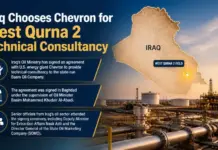





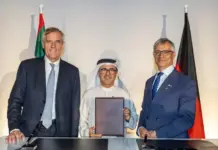



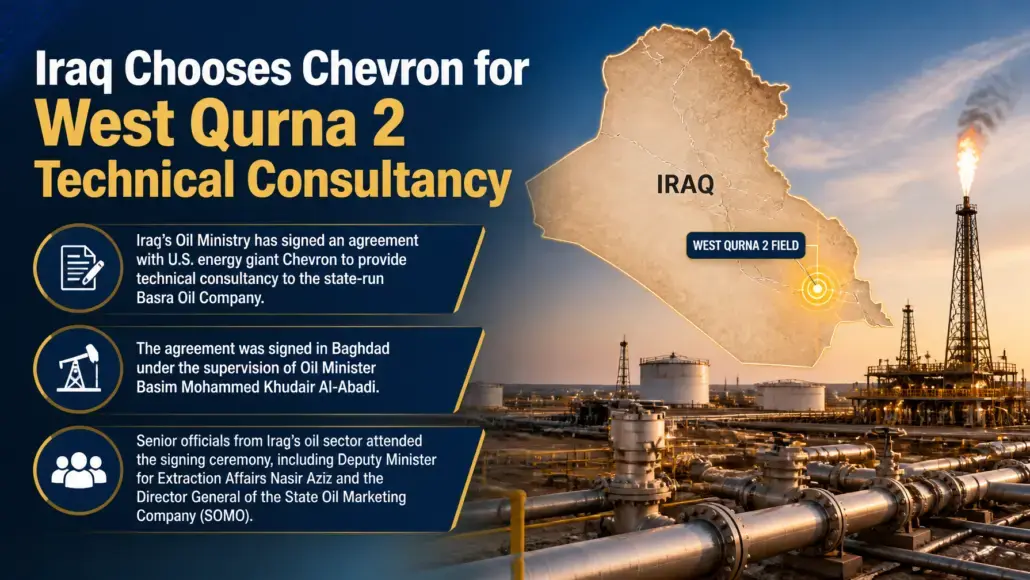
Iraq’s Oil Ministry has signed an agreement with U.S. energy giant Chevron to provide technical consultancy to the state-run Basra Oil Company, as negotiations continue over the development and operation of the West Qurna 2 oil field. The agreement was signed in Baghdad under the supervision of Oil Minister Basim Mohammed Khudair Al-Abadi. Senior officials from Iraq’s oil sector attended the signing ceremony, including Deputy Minister for Extraction Affairs Nasir Aziz, the director general of the Basra Oil Company, the director general of the State Organization for Marketing of Oil (SOMO) and the director general of the Petroleum Contracts and Licensing Directorate.
Under the terms of the agreement, Chevron will provide technical advice and support to the Iraqi side during negotiations concerning development of the giant field, according to the Oil Ministry. The technical consultancy arrangement forms part of a wider process that has brought Chevron closer to assuming a development role at West Qurna 2. In the interim, Iraq’s Basra Oil Company has been managing the field while Baghdad and Chevron continue discussions over the terms of a new arrangement.
Information Exchange Supports Further Discussions
The latest step follows a series of engagements between Chevron and Iraqi authorities. In July 2026, the Basra Oil Company and Chevron signed a non-disclosure agreement covering the exchange of technical and financial information required to assess the field and support further negotiations. That agreement was designed to establish a foundation for a potential future partnership. Chevron has since continued commercial discussions with Iraq. In August 2026, the company said its work on West Qurna 2 was based on agreements signed earlier in the year and that it was sharing its expertise with the Iraqi government as talks over the field progressed.
West Qurna 2 Remains Strategic to Iraq’s Oil Output
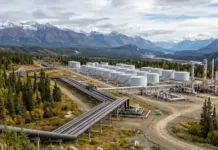
Located in Basra province in southern Iraq, West Qurna 2 is among Iraq’s largest oil fields and has estimated recoverable reserves of about 14 billion barrels. Prior to disruptions caused by regional security conditions and export restrictions, the field was producing roughly 450,000 to 480,000 barrels per day, making it an important contributor to Iraq’s overall crude output. Production from the field began in 2014.
Chevron’s expanding involvement also reflects a broader change in Iraq’s oil-sector partnerships. The company has been pursuing several projects with Baghdad, including development opportunities involving the Nasiriyah and Balad fields as well as exploration blocks. In February 2026, Iraq and Chevron signed agreements concerning the development of other hydrocarbon resources.
Export Infrastructure Adds Importance to Development Talks
The future of West Qurna 2 has gained additional importance for Baghdad as Iraq seeks to expand production while facing constraints affecting traditional export routes. The prolonged disruption around the Strait of Hormuz has underscored Iraq’s reliance on maritime routes for transporting crude to international markets and encouraged the government to consider alternative export infrastructure.
Establishing a long-term development arrangement for West Qurna 2 remains important for Baghdad as it seeks to sustain output from one of its largest oil fields, attract international investment and reinforce the country’s energy infrastructure. The latest technical consultancy agreement therefore establishes Chevron’s formal technical participation in the continuing negotiations, while Iraq works to determine the commercial, operational and development terms of a potential long-term partnership.
