








The energy sector is currently navigating one of the most transformative periods in its century-long history. For decades, the primary metrics of success in the oil and gas industry were production volumes, reserve replacement ratios, and lifting costs. While these remain critical, a new set of data points has emerged as equally vital to the survival and profitability of energy companies: carbon intensity and greenhouse gas footprints. As the global community tightens its grip on climate targets, the industry has turned to sophisticated carbon accounting platforms to manage the labyrinthine task of quantifying, reporting, and reducing their environmental impact. Oil & Gas Advancement notes that this shift represents more than just a change in accounting practices. It is a fundamental pillar of the broader oil and gas digitalization movement that is reshaping how energy is produced and managed.
For a long time, carbon management was often relegated to annual sustainability reports, frequently compiled using manual spreadsheets and high-level estimates that lacked granular accuracy. However, the rise of stringent regulatory frameworks and the intensifying pressure from the investment community have made such guesswork obsolete. Today, a company’s ability to access capital is often directly linked to the transparency and reliability of its ESG reporting. This environment has paved the way for specialized sustainability software that can ingest massive streams of data from diverse operational assets, from offshore platforms to midstream pipelines, and convert that data into actionable insights. These platforms are no longer optional nice-to-haves but are instead becoming core enterprise systems, akin to ERP or financial accounting software.
The Technological Foundation of Modern Carbon Management
To understand why carbon accounting platforms have become so central, one must first look at the sheer complexity of oil and gas operations. A single upstream operator might manage thousands of wells, each with different equipment profiles, ages, and emission characteristics. Tracking Scope 1 emissions—those produced directly by the company’s owned or controlled sources, such as gas flaring, venting, and fugitive methane leaks—is a gargantuan task. Traditional methods of estimation based on generic emission factors often fail to capture the reality of field operations. Modern platforms solve this by integrating directly with SCADA systems and IoT sensors, allowing for real-time emissions tracking that reflects what is actually happening on the ground rather than what a theoretical model suggests.
This level of precision is essential for effective carbon management. When an operator can see exactly where methane is escaping in real-time, they can deploy maintenance crews more effectively, reducing both their environmental footprint and the loss of a saleable product. This convergence of operational efficiency and environmental stewardship is the hallmark of the current era of oil and gas digitalization. By digitizing the emission profile of every asset, companies can move from a reactive posture to a proactive one, identifying high-intensity assets for decommissioning or technological upgrades long before they become regulatory liabilities.
Furthermore, these platforms extend their reach into Scope 2 emissions, which cover the indirect emissions from the generation of purchased electricity, steam, heating, and cooling consumed by the reporting company. In a refinery setting, for example, the energy intensity is massive. Carbon accounting platforms allow facility managers to monitor the carbon intensity of the power they draw from the grid in real-time. By correlating this data with production cycles, companies can optimize their operations to run more energy-intensive processes during times when the grid is powered by a higher percentage of renewable energy, thereby lowering their overall Scope 2 profile.
Navigating the Labyrinth of Compliance and Reporting
The regulatory landscape for the energy industry is currently a moving target. From the SEC’s evolving climate disclosure rules in the United States to the Corporate Sustainability Reporting Directive (CSRD) in Europe, the requirements for compliance are becoming more rigorous and legally binding. The alphabet soup of reporting standards—including TCFD, SASB, and GRI—requires data to be presented in specific formats that are often difficult to reconcile manually. Carbon accounting platforms act as a single source of truth, automating the collection and normalization of data to ensure it meets the highest standards of auditability.
Auditability is a key word here. In the past, ESG reporting was often viewed as a marketing exercise. Today, it is a financial one. Institutional investors, including some of the world’s largest pension funds and asset managers, now require climate disclosures that are as rigorous as financial statements. If a company claims a 10% reduction in its carbon intensity, it must be able to prove that reduction with granular data that can withstand third-party verification. Sustainability software provides the digital trail necessary for this, recording every data point, calculation methodology, and manual override to ensure that the final report is robust and defensible.
This focus on compliance also extends to the carbon tax and pricing mechanisms being implemented globally. In jurisdictions with active carbon markets or taxes, such as Canada or parts of Europe, every tonne of CO2e emitted carries a direct financial cost. Accurate emissions tracking through dedicated platforms allows companies to forecast these costs accurately and integrate them into their long-term financial planning. Without a centralized platform, the risk of underreporting (leading to legal penalties) or overreporting (leading to unnecessary tax payments) becomes a significant financial threat.
Strategic Decision Making and the Value of Carbon Data
Beyond the immediate needs of reporting and compliance, carbon accounting platforms are becoming essential tools for corporate strategy and portfolio management. The oil and gas industry is increasingly viewing its assets through the lens of carbon competitiveness. In a world where carbon is priced, a low-cost producer is not necessarily the most profitable if their carbon intensity is significantly higher than the industry average. By using carbon management tools, executives can model different scenarios for their portfolios, such as the impact of a new carbon capture and storage (CCS) project on the net-present value of a specific field.
This strategic utility is particularly visible during mergers and acquisitions. During the due diligence process, the carbon footprint of an acquisition target is now scrutinized as closely as its reserves and production history. A carbon accounting platform allows a potential buyer to quickly assess the carbon liability they would be taking on. If a target company has high Scope 1 emissions due to outdated infrastructure, the buyer can factor the cost of necessary upgrades into the purchase price. Conversely, assets that are already digital-ready and have low emission profiles may command a premium in the market.
The integration of these platforms also fosters a culture of accountability across different departments. When emissions data is no longer siloed within a small sustainability team but is visible to operations, finance, and engineering, it begins to influence daily decision-making. Plant managers can be incentivized based on carbon reduction targets just as they are on production quotas. This democratization of data is a critical step in the humanized digital transformation of the industry, where technology empowers employees at all levels to contribute to the company’s transition goals.
The Role of AI and Machine Learning in Carbon Accounting
As the volume of data generated by oil and gas operations grows, the role of artificial intelligence and machine learning within carbon accounting platforms is expanding. These technologies are particularly adept at identifying patterns that human analysts might miss. For example, AI can analyze historical data from a pipeline network to predict where leaks are most likely to occur based on pressure fluctuations, temperature changes, and equipment age. This predictive capability moves carbon management from a historical accounting exercise to a forward-looking operational strategy.
Machine learning also plays a vital role in reconciling disparate data sets. In the oil and gas world, data often comes in various formats and frequencies—some sensors might report every second, while others might only be read manually once a month. Advanced sustainability software uses AI to fill the gaps, providing a continuous and coherent view of the emission landscape. This is especially important for joint ventures, which are common in the industry. Often, an operator may have limited visibility into the data of a non-operated asset. Platforms that can ingest and standardize third-party data allow for a more comprehensive view of a company’s total carbon exposure.
The future of these platforms lies in their ability to provide what-if analysis for decarbonization pathways. An engineer could use the software to simulate the impact of replacing a gas-fired turbine with an electric one powered by wind energy. The platform could calculate not just the reduction in Scope 1 emissions, but also the change in Scope 2 emissions, the capital expenditure required, and the expected payback period based on projected carbon prices. This level of integrated modeling is what will ultimately drive the large-scale capital reallocations necessary for the energy transition.
Bridging the Gap Between Field Operations and the C-Suite
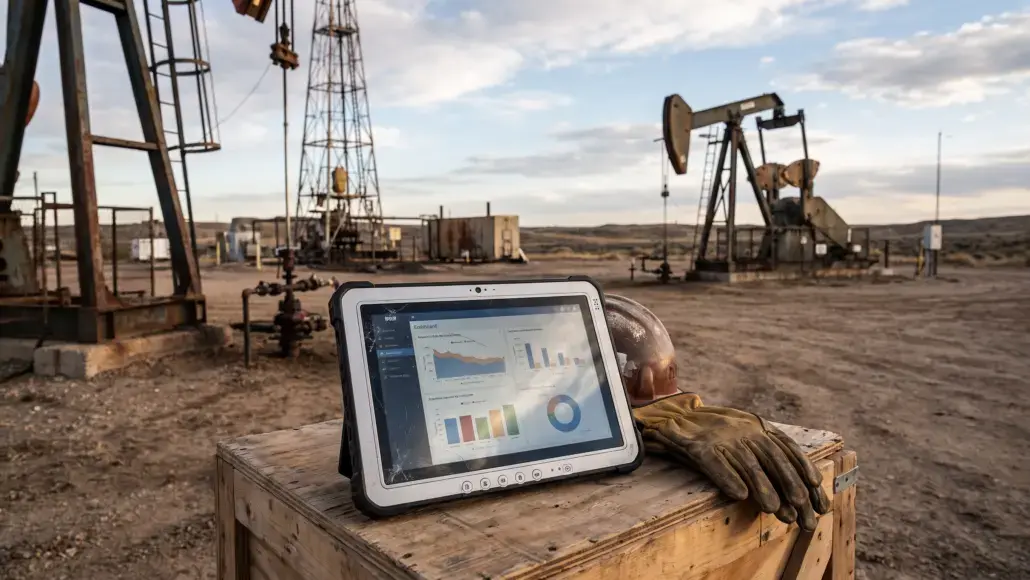
One of the most significant hurdles in the energy industry’s digital journey has been the data silo problem. Operational technology in the field and information technology in the office have historically existed in separate worlds. Carbon accounting platforms are effectively bridging this gap. By pulling data directly from the wellhead and presenting it in a dashboard designed for the boardroom, these tools ensure that executive-level decisions are grounded in operational reality.
This connectivity also improves the speed of reporting. In the traditional model, it might take months after the end of a fiscal year to produce a comprehensive sustainability report. In a world of volatile energy prices and rapidly changing regulations, that timeframe is no longer acceptable. Real-time or near-real-time emissions tracking allows for continuous disclosure, giving stakeholders a more current view of the company’s progress. This agility is a competitive advantage, signaling to the market that a company is well-managed and prepared for the risks associated with the energy transition.
The human element of this transition cannot be overlooked. As oil and gas companies evolve into energy companies, the skill sets required for their workforce are changing. Engineers are now expected to be data-literate, and accountants are expected to understand the nuances of methane warming potentials. Carbon accounting platforms facilitate this cross-functional collaboration by providing a common language and a shared set of data. When everyone from the field technician to the CFO is looking at the same dashboard, the path toward sustainability becomes a collective effort rather than a top-down mandate.
Future-Proofing the Energy Industry Through Digitalization
Looking ahead, the importance of carbon accounting platforms will only continue to grow as the industry moves toward more complex decarbonization strategies. Concepts like the circular economy and hydrogen value chains will require even more sophisticated tracking mechanisms to account for carbon footprints across multiple stages of transformation and transport. The integration of blockchain technology is also being explored to provide an immutable record of carbon credits and offsets, further enhancing the transparency of the market.
Moreover, the pressure to report on Scope 3 emissions—those that occur in the value chain of the reporting company, including the use of their sold products—is the next great frontier. While incredibly difficult to measure accurately, carbon accounting platforms are beginning to incorporate life-cycle assessment (LCA) tools to help companies estimate the downstream impact of their products. This will likely lead to more collaboration between oil and gas producers and their customers, as both sides of the transaction seek to lower the carbon intensity of the final product, whether it be fuel for an airline or feedstock for a chemical plant.
In the final analysis, the rise of carbon accounting platforms is a testament to the industry’s recognition that its future depends on its ability to measure what it manages. By leveraging oil and gas digitalization, companies are turning the challenge of emissions tracking into an opportunity for operational excellence and strategic renewal. The transition to a low-carbon economy is an arduous journey. But Oil & Gas Advancement believes that with the right digital tools, the energy industry is proving that it can adapt, innovate, and thrive in a more transparent and accountable world. These platforms are not just recording the change. They are the engines driving it, ensuring that the energy of tomorrow is produced more responsibly and documented more accurately than ever before.
