






















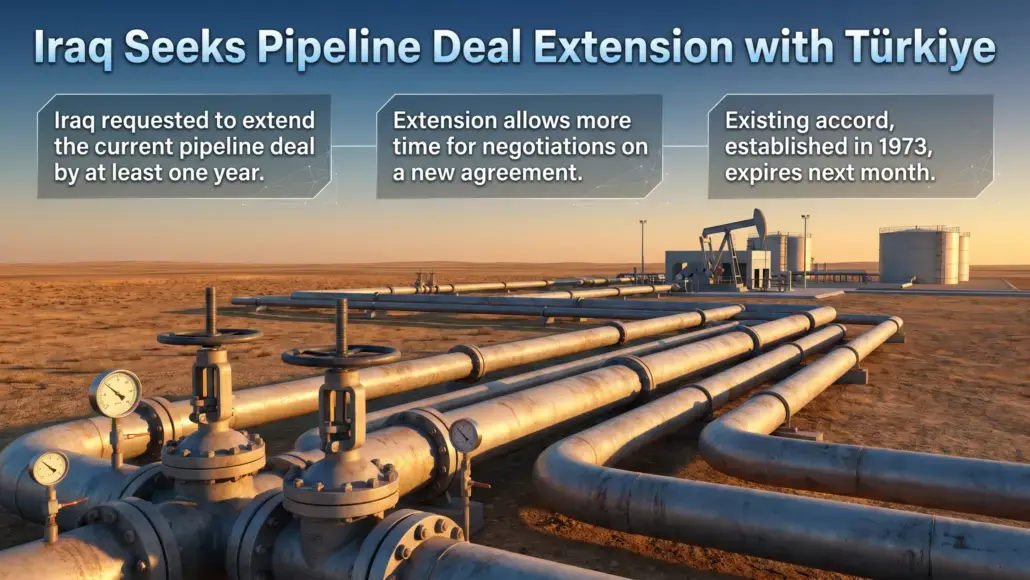
Iraq has submitted a formal request to Türkiye for the Kirkuk-Ceyhan pipeline agreement extension by a minimum of one year. This proposal for extending the Kirkuk-Ceyhan pipeline agreement by the state oil marketer, SOMO, seeks to secure additional time for ongoing negotiations between Baghdad and Ankara to finalize a replacement framework for crude oil shipments. The current accord, initially put in place in 1973, is slated to conclude on 27th July 2026, following Türkiye’s decision last year not to renew it under its existing terms.
According to SOMO chief Ali Nizar, Iraq has presented a proposal to maintain the Kirkuk-Ceyhan pipeline agreement’s continuity while discussions progress on a new draft that will govern the crude oil flowing through Türkiye’s Mediterranean terminal at Ceyhan. Earlier statements from Türkiye’s Energy and Natural Resources Minister Alparslan Bayraktar indicated that Türkiye is keen on incorporating provisions to enhance the utilization of infrastructure that has historically operated below its full potential.
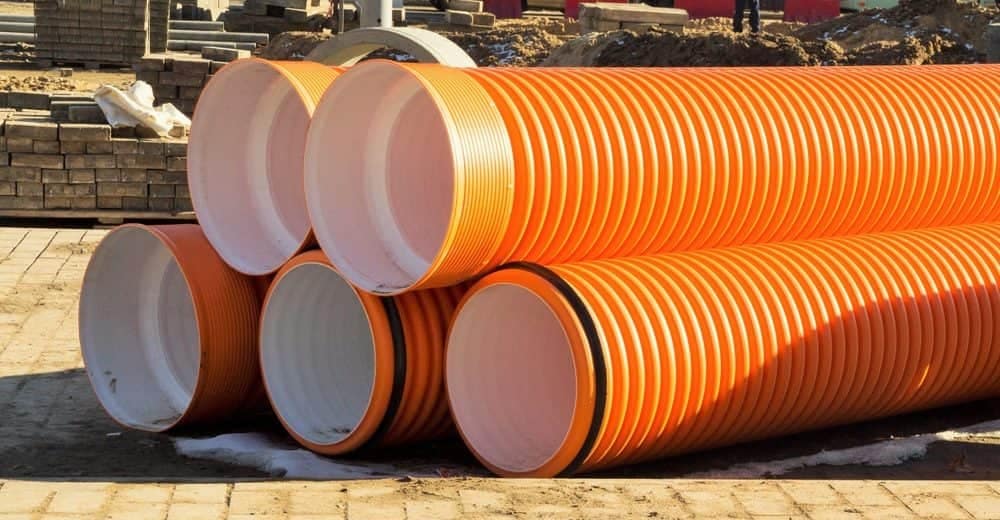
Bayraktar has emphasized that any new agreement should include a mechanism designed to ensure the pipeline operates at a more efficient capacity. He previously noted that the Türkiye-Iraq Crude Oil Pipeline possesses a capacity of 1.5 million barrels per day, yet it has not consistently operated at this level even when active. He also highlighted Türkiye’s significant investments in maintaining the route over the years, expressing an expectation that the future framework will foster conditions conducive to more efficient system operation.
The strategic importance of alternative export routes for Iraqi crude has been underscored by recent geopolitical developments. Minister Bayraktar has supported extending the pipeline towards Basra, Iraq’s primary oil-producing region, particularly in light of disruptions that have affected passage through the Strait of Hormuz. The Strait of Hormuz accounts for a substantial portion, estimated between 80% and 90%, of Iraq’s total oil exports. During past regional conflicts, Iraq’s exports via this waterway saw significant declines.
In a move to bolster export capabilities, Baghdad and Erbil agreed in early 2026 to reroute a portion of Iraq’s crude oil exports through northern infrastructure connected to Türkiye’s Ceyhan terminal. Initial flows were set to commence at 250,000 barrels per day, with Iraqi authorities subsequently announcing plans to increase these volumes to 770,000 barrels per day within two and a half months.
The Iraqi government is also advancing a broader diversification strategy, which includes a proposed $5 billion pipeline project intended to connect southern oil fields with export terminals in Ceyhan, Baniyas in Syria, and Aqaba in Jordan. This ambitious project aims to eventually transport up to 2.5 million barrels per day. Concurrently, efforts are underway to repair the direct Kirkuk-Ceyhan connection as part of wider initiatives to strengthen the country’s overall oil export network.
