





Early warning signs of an European gas supply crunch are beginning to appear, with Moldova’s breakaway region of Transnistria cautioning that gas supplies are running short. Analysts warn that the situation may worsen if liquefied natural gas shipments from the Middle East fail to resume soon. Transnistria, also known as Transdniestria and Pridnestrovie, is a pro-Russian territory that separated from Moldova in the early 1990s. For many years the Russian-speaking region received natural gas from Russia virtual ly free of charge, using that fuel to generate electricity which it supplied to Moldova. This arrangement ended in 2024 when Ukraine declined to extend a gas transit contract with Russia’s Gazprom. The termination of that agreement created an immediate gas shortage in Transnistria and forced the region to begin purchasing supplies from European gas providers at significantly higher prices, a shift that now places it directly within the wider European gas supply crunch.
The availability of gas volumes for the region has recently declined as the ripple effects of conflict in the Middle East spread through global energy markets. Transnistria’s economic development ministry acknowledged the situation, stating: “In connection with events in the Middle East, there have been critical disruptions in gas supplies,” and adding that “Sharp cuts in gas volumes have led to limits on usage for commercial purposes or thermal heating.” The same report cited the speaker of Moldova’s parliament as saying that Transnistria only had gas for several days. The tightening supply environment reflects broader pressures in Europe, where natural gas prices have surged dramatically. Prices have doubled in less than a week, with the The Dutch Title Transfer Facility (TTF) benchmark intraday contract topping 60 euros per megawatt-hour earlier this week.
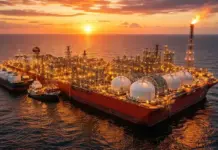
The spike in prices followed Iranian strikes on Qatari LNG production facilities, prompting QatarEnergy to shut down its entire LNG production system. Shortly afterward, the company declared force majeure on LNG exports. Because Qatar accounts for roughly a fifth of global LNG flows, the disruption immediately affected markets and intensified the European gas supply crunch. Europe remains particularly exposed to such supply shocks. Since reducing reliance on Russian pipeline gas, the European Union has turned increasingly to seaborne LNG imports, with Qatar among its largest suppliers. Although some observers point to abundant American liquefied gas supplies, those volumes are unlikely to be sold at prices favorable to buyers. With Qatar’s LNG production suspension, control of the liquefied gas market has shifted firmly toward sellers, raising the prospect of further price pressure for European importers.
Smaller EU members and countries such as Moldova face especially acute vulnerability during an European gas supply crunch because their economies have less financial flexibility to manage higher energy costs. Yet the potential impact could be equally severe for larger economies like Germany, which forms a central pillar of the European Union and whose industrial sector relies heavily on stable energy supply. Moldova itself aims to join the bloc by 2030, making regional energy stability increasingly important. Qatar supplies between 12% and 14% of the European Union’s natural gas. Even with lower direct dependence, Europe remains exposed to price shocks and supply disruptions across the LNG market, meaning the current European gas supply crunch could reverberate across the continent from Transnistria to the UK.
