






North Sea Port is at present busy making the preparations to help with the refueling of alternative shipping fuels within the port area. An independent risk evaluation has gone on to demonstrate that the port happens to meet all the conditions so as to be able to safely and efficiently process the bunkering of LNG, hydrogen, and methanol as well as ammonia in Vlissingen, Terneuzen, and also Ghent. This goes on to represent a significant step for the North Sea Port in being a leading European port when it comes to refueling of alternative shipping fuels.
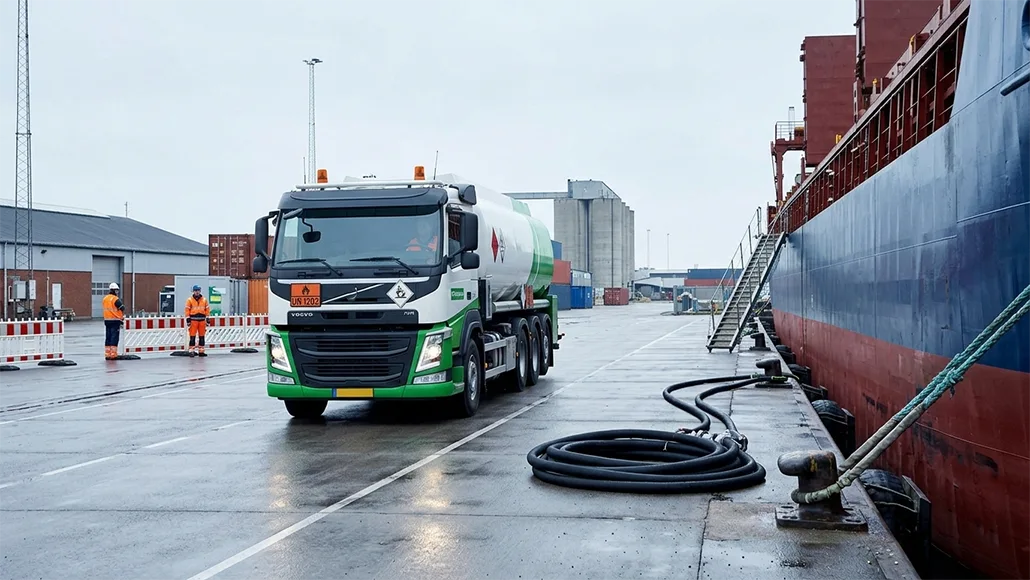
It is worth noting that international shipping is growingly switching from classic fossil fuels like fuel oil and diesel to more sustainable choices. So as to support that level of shift, North Sea Port has commissioned an external risk evaluation for all the berths present in the port area in order to identify where in the port LNG, hydrogen, methanol, as well as ammonia can get refueled. The study has gone on to evaluate trucktoship and shiptoship refuelling which also called bunkering, for both maritime and inland shipping. This has involved looking not just at nautical risks but at the surrounding infrastructure also, like roads, high-voltage lines, wind turbines, and strictly regulated Seveso companies having hazardous substances within their premises.
The CEO of North Sea Port, Cas König, said that “The independent risk analysis showed that LNG, hydrogen, methanol, and ammonia can be safely refueled throughout the port area in Vlissingen, Terneuzen and Ghent with maximum consideration for safety and the surrounding area. Tanker vessels and tank trucks can safely supply these alternative fuels to maritime and inland shipping that use them as fuel.”
Stringent needs pertaining to safety and infrastructure
When it came to this phase, policy frameworks got tested, safety needs got validated, and there were preparations for trial operations that got completed -all of which are critical steps confirming that the port is all set for bunkering these fuels.
Companies were surveyed so as to gauge their anticipations in order to determine the required safety and infrastructure needs for every fuel. The study also had a peep at the probabilities for harmonizing audits along with permits with certain other international ports, how policy measures sync with the operational practice, and under which conditions the trial projects can get safely conducted.
Due to the fact that these new fuels have much lower energy density along with specific characteristics like higher flammability and toxicity, more bunkering operations would be required than what the case is at present, along with stricter safety and infrastructure requirements that will have to be applied. Simultaneously, the study also went on to reveal that companies and public authorities, along with the local residents, want to be clear as to where and which fuel can get refueled. The locations are made visible on a bunkering map for the complete port area.
To be able to showcase safe handling of these fuels, there are going to be controlled bunkering operations that are going to be carried out in the times ahead. After completion, every test is going to be assessed with the parties that are involved along with the emergency services so as to further refine safe as well as efficient refuelling functions. This kind of approach is crafted so as to prepare the port for larger and even more regular bunkering operations with alternative fuels and also elevate confidence within the market.
North Sea Port – A European leader
Apparently, the study goes on to support a number of ambitions of the North Sea Port. It contributes to the expansion of future-proof port infrastructure and makes the intermodal cooperation stronger – for example with sustainable transport routes, the so-called Green Corridors – and also makes a significant contribution to the increased sustainability pertaining to the nautical logistics chain. Through being prepared now so as to refuel with all four alternatives fuel across the port area, North Sea Port is indeed placing itself as a leader when it comes to energy shift as far as European shipping is concerned.
International benchmarks and cooperation with ports
The level of readiness of the North Sea Port for every fuel was evaluated with reference to international benchmarks of the International Association of Ports and Harbours – IAPH and the Port Readiness Level instrument in terms of maritime fuels. In this way, North Sea Port is indeed operating towards the development of common bunkering yardsticks along with other Dutch as well as Belgian ports.
