





In a recent development, Energinet has gone on to enter into a five-year agreement with Worley when it comes to the development of the Danish Hydrogen Backbone 1, which apparently is the first stage of the Danish hydrogen infrastructure from Esbjerg through Veerst to Frøslev on the German border. The partnership has been formed with an intent to make sure of flexibility in implementation of the project and also offer access to international experience, while also building on solid knowledge as far as Danish conditions are concerned.
Notably, the agreement is an EPCM collaboration – Engineering, Procurement, and Construction Management which means that a single supplier happens to be given the overall responsibility when it comes to technical design, in addition to tendering as well as coordination of contractors along with construction management.
Worley, at the same time, is also going to become an integrated part of the project organization by Energinet rather than just acting as an external and an arm’s-length supplier. This development offers more logical project management and also makes it very possible to adjust resources continuously along with organization in a project, which indeed is new territory in not one but many respects.
According to the CEO of Energinet Brint, Lone Edelbo, “Hydrogen produced from electricity from wind and solar is an important aspect of the green transition – both in Denmark and internationally – but it is also a new area. That is why we need to combine our own expertise at Energinet with relevant technical experience and knowledge specifically within hydrogen so that we can ensure the necessary quality and progress in the work on establishing the Danish Hydrogen Backbone 1.”
If we go by the plans that are currently on, the Danish Hydrogen Backbone 1 is supposed to be in operation by the end of 2030, and the ambitious timeline needs the EPCM collaboration to kick off already now. This is because of the fact that, among other things, the intricacies of the design process, along with the requirement to plan critical deliveries like pipes and valves, along with other components, and that too at an early stage due to extended procurement as well as delivery times.
International worth mixed with Danish skill via the new collaboration, Energinet looks forward to gaining access to international experience from large energy and hydrogen projects, while the Danish subcontractor is going to act as a local partner having an in-depth knowledge of the Danish rules, authority requirements as well as local conditions. The agreement took shape after a tender process wherein three prequalified organizations went on to submit their bids.
Added Lone Edelbo, “The EPCM collaboration means that we can tick off yet another important prerequisite for the realization of the Danish hydrogen infrastructure, and it gives us a solid foundation for moving on to the next phase of the project.”
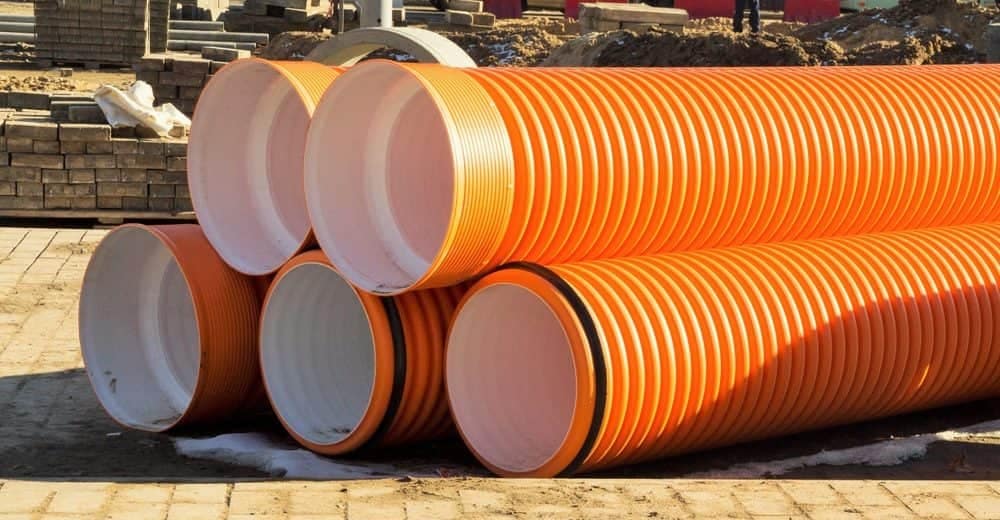
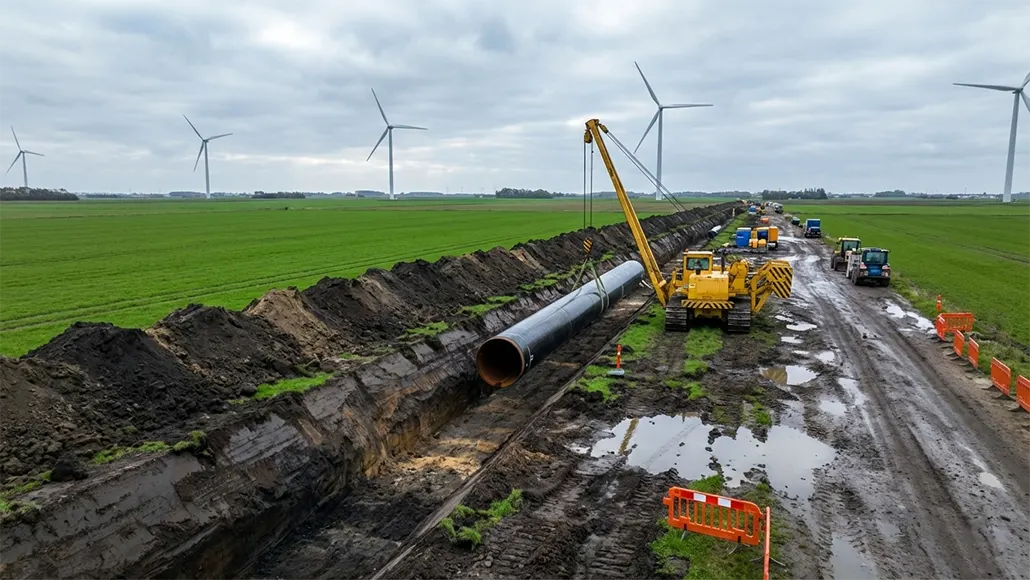
Worley is going to deliver EPCM services for around 41 km of the hydrogen pipeline situated between Esbjerg and Veerst and would lead to the conversion of almost 89 km of the present natural gas pipeline from Veerst to Frøslev. Besides this, the scope also has in it the associated infrastructure, which includes above-ground stations, which are pretty essential to support the future hydrogen pipeline network of Denmark and export to Germany.
The fact is that the establishment of the hydrogen infrastructure happens to be conditional on the market that is booking at atleast 0.5 GW of transport capacity, as specified in the political agreement. Interestingly, the capacity sale came into effect on 30 January 2026 and is going to run till 01 December 2026.
