


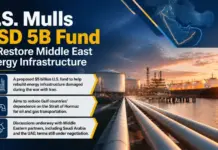
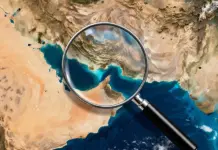





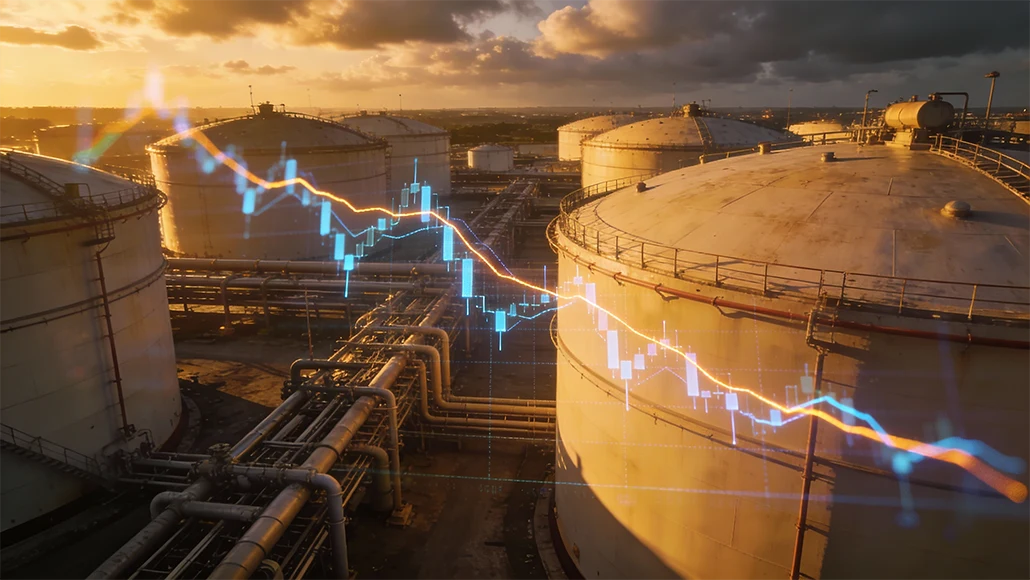
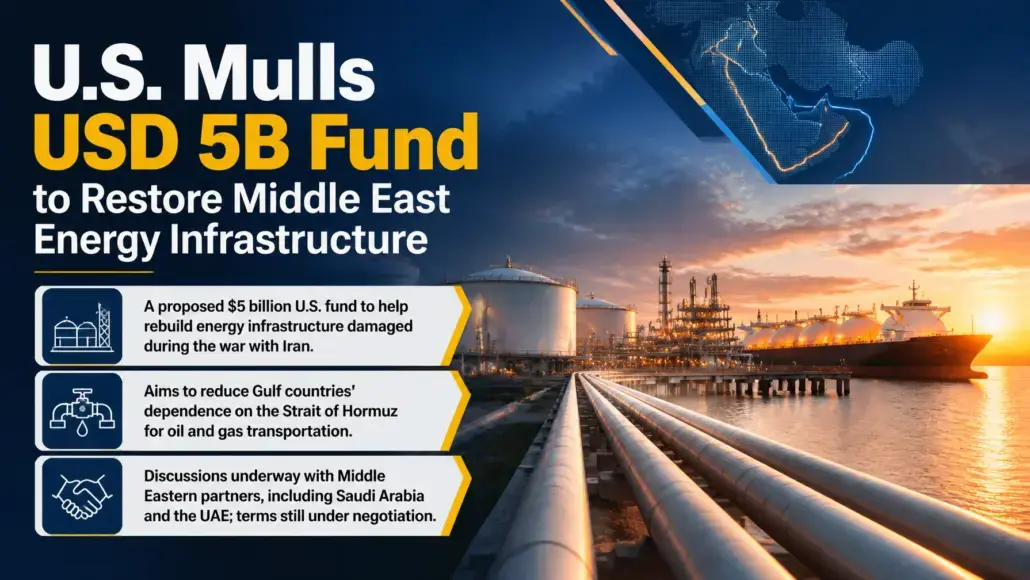
The U.S. administration has proposed a $5 billion investment fund aimed at helping rebuild energy infrastructure damaged during the war with Iran while supporting measures to reduce Gulf countries’ dependence on the Strait of Hormuz for oil and gas transportation, according to several media reports. The proposal is reportedly being discussed with several Middle Eastern countries, including Saudi Arabia and the United Arab Emirates. However, the terms remain under negotiation, and participation has not yet been finalized. The proposed Middle East energy infrastructure initiative comes after the conflict caused significant damage to pipelines, refineries, gas facilities and other energy infrastructure across the region.
Saudi Arabia and Qatar Face Energy Infrastructure Disruptions
Saudi Arabia has reported disruptions to critical energy infrastructure, including its East-West Pipeline, which serves as an important alternative route for moving crude without relying entirely on the Strait of Hormuz. The pipeline has a reported capacity of around 4-5 million barrels per day, equivalent to roughly 4-5% of global oil supply. Recent attacks temporarily disrupted operations, highlighting the vulnerability of alternative export routes during the conflict.
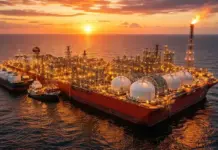
The disruptions have placed additional focus on the resilience of Middle East energy infrastructure and the importance of maintaining routes that can support oil transportation beyond the Strait of Hormuz. Qatar has also faced damage at the Ras Laffan industrial complex, affecting LNG production infrastructure. The disruption comes as Qatar works with international LNG producers to secure additional supply arrangements. This situation underscores the importance of restoring regional gas infrastructure and maintaining reliable export capacity.
UAE Assets and Gulf Energy Supply Routes
The UAE has likewise experienced disruptions affecting major energy assets, including the Ruwais refinery, Habshan gas facilities, Shah gas field and Fujairah port. Restoration of these facilities could support the gradual normalization of regional refining, gas processing, petrochemical feedstock and energy logistics.
Beyond repairing damaged facilities, the proposed funding could accelerate investments in alternative pipelines, export terminals and other infrastructure designed to diversify energy transportation routes. Such investments could form part of wider efforts to strengthen Middle East energy infrastructure while reducing dependence on established transportation routes. If implemented, the initiative could therefore influence both the pace of infrastructure recovery and the longer-term structure of Gulf energy supply chains. However, the proposal remains under discussion, meaning its final size, participants and deployment timeline could change.
