








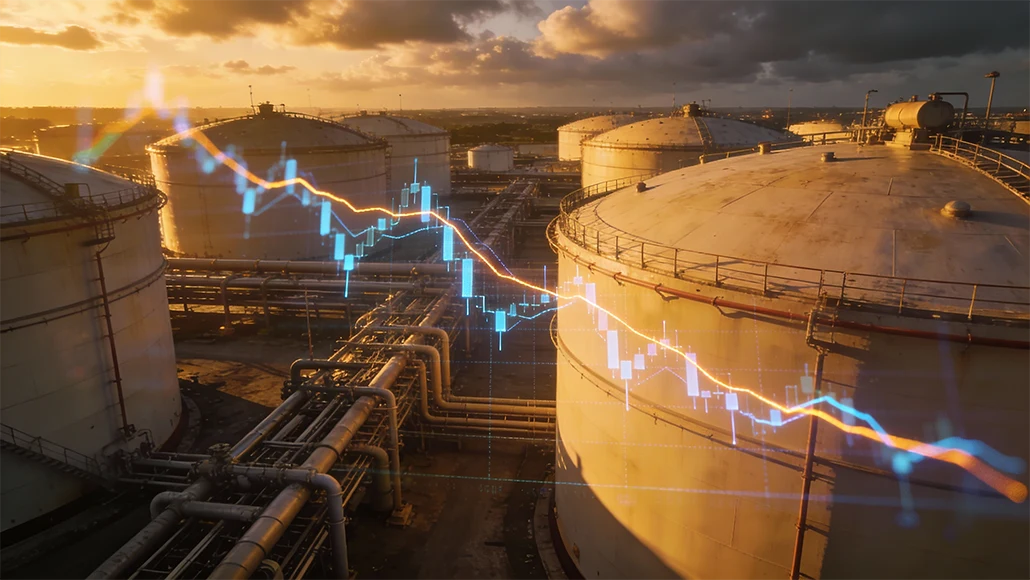
The energy industry is undergoing a profound digital transformation, moving away from traditional trial-and-error methodologies toward a data-driven paradigm. Nowhere is this shift more evident than in the complex arena of deepwater exploration. Real-time drilling analytics has emerged as a cornerstone of modern well construction, providing engineers with the visibility needed to optimize performance in some of the world’s most challenging environments. By harnessing the power of high-frequency data, cloud computing, and advanced algorithms, operators can now monitor downhole conditions with unprecedented precision. This capability is not merely about collecting data. Oil & Gas Advancement notes that it is also about converting vast streams of raw information into actionable insights that drive efficiency, enhance safety, and ultimately improve the economic viability of deepwater projects. As we push the boundaries of depth and complexity, the ability to analyze and react to drilling dynamics in real-time is what separates world-class operations from the rest.
The Convergence of Data Science and Offshore Engineering
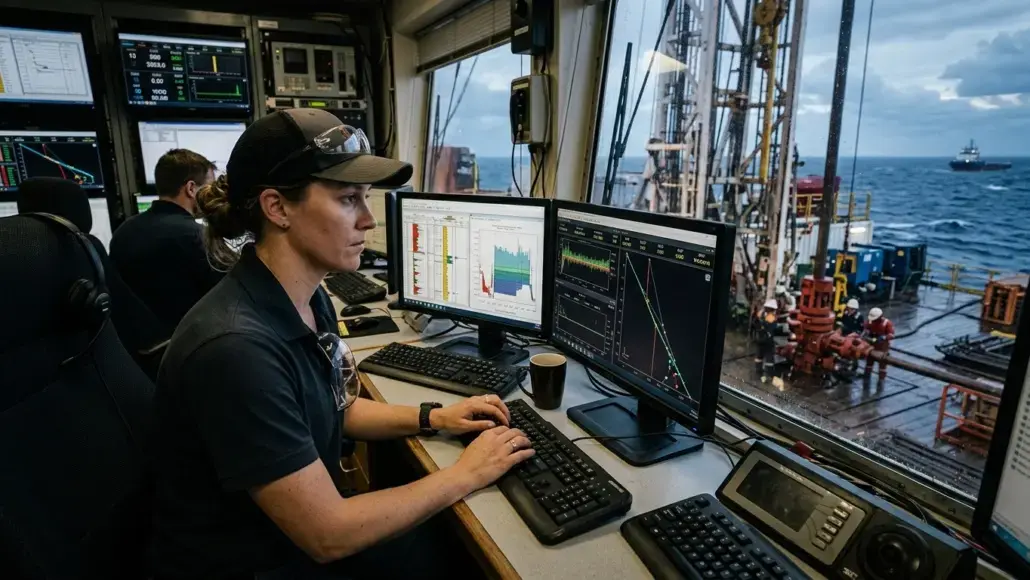
The integration of real-time drilling analytics into offshore operations represents the marriage of heavy engineering and cutting-edge data science. Historically, drilling decisions were often based on lagging indicators or the experience of the drill team. While human expertise remains invaluable, the sheer volume of data generated by modern rigs—from surface sensors to downhole measurement-while-drilling (MWD) tools—surpasses the cognitive capacity of any individual. Analytics platforms fill this gap by processing thousands of data points every second, identifying patterns that might be invisible to the naked eye. This convergence allows for a more granular understanding of mechanical parameters such as weight-on-bit (WOB), torque, and rotary speed. In the context of deepwater wells, where the cost of failure is astronomical, this level of technical oversight is essential for maintaining the integrity of the wellbore and the drilling equipment.
Leveraging WITSML for Seamless Data Integration
A critical enabler of this digital revolution is the adoption of industry standards like the Wellsite Information Transfer Standard Markup Language (WITSML). WITSML serves as the “common language” for the oil and gas industry, allowing data to flow seamlessly between different service providers, operators, and software platforms. In a typical deepwater project, multiple vendors may be involved in mud logging, directional drilling, and pressure management. Without a standardized format, the integration of these data streams would be a logistical nightmare. By leveraging WITSML, real-time drilling analytics platforms can aggregate diverse data sources into a single, cohesive view. This interoperability ensures that the right data reaches the right person at the right time, whether they are on the rig floor or in a remote operation center thousands of miles away. The result is a more collaborative and informed decision-making process that spans the entire value chain.
Predictive Modeling and Early Hazard Detection
One of the most transformative applications of real-time drilling analytics is in the field of predictive modeling. By training machine learning algorithms on historical data from similar wells, operators can now anticipate potential hazards before they manifest as critical incidents. For example, analytics can identify early signs of bit balling, pipe stuckness, or impending equipment failure by detecting subtle deviations from the expected performance baseline. In deepwater environments, where geological uncertainties are high, this early warning system is a vital safety layer. Instead of reacting to a problem that has already occurred, engineers can proactively adjust drilling parameters or perform preventative maintenance. This shift from reactive to proactive management not only prevents costly non-productive time (NPT) but also significantly reduces the risk of catastrophic events, ensuring that deepwater assets are protected throughout their lifecycle.
Optimizing the Rate of Penetration with Real-Time Feedback
Efficiency in drilling is often measured by the Rate of Penetration (ROP)—the speed at which the drill bit moves through the rock. However, simply pushing for the highest ROP can lead to premature tool wear, drill string vibrations, or wellbore instability. Real-time drilling analytics allows for the optimization of ROP by finding the “sweet spot” where speed is maximized without compromising tool life or safety. Through real-time feedback loops, analytics platforms can recommend the ideal combination of WOB and RPM for the specific lithology being drilled. This “closed-loop” optimization is particularly effective in deepwater wells, where hard rock formations or complex salt layers can significantly hinder progress. By maintaining an optimal ROP, operators can reduce the number of days required to reach the target depth, leading to millions of dollars in savings on rig rental costs and operational overhead.
Reducing Invisible Lost Time through Behavioral Analytics
While NPT is a well-understood metric, the industry is increasingly focusing on “Invisible Lost Time” (ILT)—the inefficiencies that occur during routine operations, such as pipe connections, tripping, or BHA assembly. Real-time drilling analytics plays a crucial role in identifying and eliminating ILT by benchmarking performance against the “Technical Limit.” By analyzing the time taken for each repetitive task across different shifts and rigs, operators can identify best practices and areas for improvement. Behavioral analytics can reveal, for instance, that one crew consistently performs connections faster than another, allowing for targeted training and process standardization. In the high-stakes world of deepwater drilling, where every minute counts, the cumulative effect of reducing ILT can be the difference between a project meeting its financial targets or exceeding its budget. Digital performance surveillance ensures that the rig is always operating at its peak potential.
The Future of Autonomous Drilling and Digital Twins
As we look toward the future, the role of real-time drilling analytics will only expand with the development of autonomous drilling systems and digital twins. A digital twin is a virtual replica of the physical well and rig, updated in real-time with sensor data. This allows engineers to simulate different scenarios and predict the outcome of specific actions before they are executed in the real world. When coupled with AI-driven control systems, these analytics can enable autonomous drilling, where the system makes real-time adjustments to maintain the well path and optimize performance with minimal human intervention. While the industry is still in the early stages of this journey, the potential for increased consistency, safety, and efficiency is immense. In the ultra-deepwater frontier, where the environment is too complex for manual control alone, these advanced digital technologies will be the key to unlocking the full potential of global energy reserves.
Real-time drilling analytics is no longer a peripheral technology; it is the heartbeat of modern deepwater exploration. By providing the tools to see, understand, and predict the dynamics of the wellbore, it empowers the industry to operate with a level of precision and confidence that was once unimaginable. As the digital ecosystem continues to mature, Oil & Gas Advancement believes that the insights generated by these platforms will drive continuous improvement, ensuring that deepwater well performance remains on an upward trajectory. In an era where the energy transition demands both efficiency and responsibility, the power of data will be the ultimate catalyst for a safer and more sustainable offshore future.
