








As the world’s easily accessible oil and gas reserves begin to mature, the focus of the energy industry has shifted toward maximizing the recovery from existing assets. In the realm of deepwater production, this often means overcoming the natural decline in reservoir pressure that occurs over time. Subsea compression technology has emerged as a revolutionary solution to this challenge, allowing operators to maintain production levels and significantly extend the life of offshore gas fields. Oil & Gas Advancement notes that by moving the compression process from the surface—on massive, expensive platforms—to the seafloor, the industry has unlocked a new era of efficiency and resource utilization. This technological leap, pioneered in the harsh waters of the North Sea and now spreading globally, represents a fundamental shift in how we approach subsea field development and brownfield optimization.
The Challenge of Declining Reservoir Pressure
All gas reservoirs follow a predictable life cycle. In the early stages, the natural pressure of the reservoir is sufficient to push the gas through subsea pipelines and up to the surface processing facilities. However, as the gas is extracted, the pressure drops. Eventually, the pressure becomes too low to overcome the hydrostatic head of the water column and the frictional losses within the flowlines. Conventionally, operators would install compression facilities on a surface platform to “suck” the gas from the wells. However, the further the compressor is from the wellhead, the less efficient it becomes. Subsea compression technology solves this problem by placing the compressor as close to the well as possible, on the seabed. This drastically reduces the backpressure on the reservoir, allowing for a much higher recovery factor and ensuring that billions of cubic meters of gas, which would otherwise be left behind, are brought to market.
Comparing Subsea and Surface Compression Systems
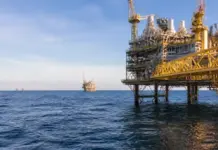
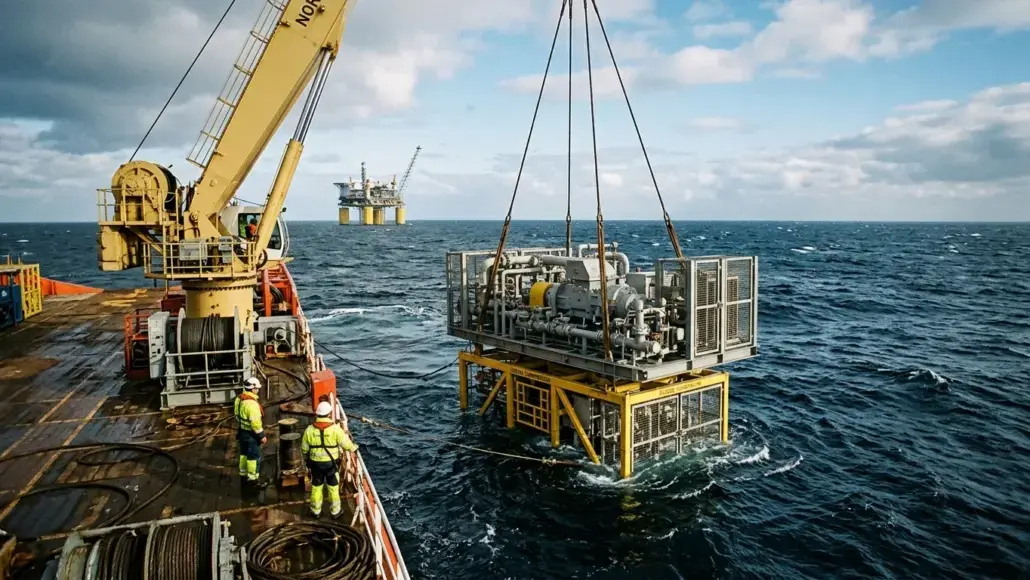
The choice between subsea and surface compression is driven by both physics and economics. A surface compression system requires a large platform or a floating production unit capable of supporting the massive weight of the compressors and their power systems. In deepwater, the cost of such a structure can be prohibitive, often reaching billions of dollars. Furthermore, surface systems are exposed to the elements, requiring constant maintenance and crew presence. In contrast, subsea compression modules are compact, modular, and designed to operate autonomously on the seafloor. By eliminating the need for a new platform, subsea technology significantly reduces the capital expenditure (CAPEX) of a field development. Moreover, because the compression happens closer to the source, the energy required to transport the gas is reduced, leading to lower operational costs and a smaller carbon footprint over the field’s lifetime.
Engineering the Next Generation of Subsea Factories
The realization of subsea compression is the result of decades of engineering innovation. A subsea compressor must be capable of operating at depths of 1,000 meters or more, where the pressure is immense and the temperature is near freezing. The system typically consists of a scrubber to separate liquids from the gas, a compressor to boost the gas pressure, and a pump to handle the separated liquids. These components must be packaged into a “subsea factory” that is robust enough to run for years without human intervention. The development of high-voltage subsea power cables and variable speed drives (VSDs) has been crucial in providing the necessary energy to these seafloor installations. Modern systems, such as those deployed at the Åsgard and Ormen Lange fields, utilize “lego-like” modular designs, allowing individual components to be retrieved and replaced by Remotely Operated Vehicles (ROVs) if maintenance is required, ensuring maximum field availability.
Operational Resilience and Uptime in Hostile Environments
One of the most impressive aspects of subsea compression technology is its proven reliability. The first large-scale systems have demonstrated uptime rates exceeding 99%, a remarkable feat considering the complexity of the equipment and the hostility of the environment. This resilience is achieved through a combination of redundant systems, advanced material science, and sophisticated control algorithms. Digital sensors monitor every aspect of the system’s health, from vibration levels in the compressor bearings to the chemical composition of the fluid stream. This data is transmitted in real-time to shore-based control centers, where engineers can use predictive analytics to identify potential issues before they lead to a shutdown. In deepwater operations, where an unplanned outage can cost millions of dollars a day, the reliability of subsea compression is a primary driver of its adoption.
Environmental and Economic Benefits of Seafloor Processing
Beyond the technical and operational advantages, subsea compression technology offers significant environmental and economic benefits. By increasing the recovery factor of a field—sometimes by as much as 10% to 15%—the technology allows for more energy to be produced from a single development, reducing the need to drill new wells in pristine environments. Furthermore, because subsea systems are powered by electricity—often from renewable sources on shore—they emit significantly less CO2 than gas-fired turbines on a surface platform. Economically, the ability to extend the life of a field by a decade or more provides a massive boost to the return on investment for operators and host governments alike. As the industry faces increasing pressure to operate more sustainably and cost-effectively, the move toward seafloor processing is becoming an essential part of the global energy strategy.
The Future of Subsea Power and Autonomous Operations
As we look to the future, the evolution of subsea compression will be driven by further advancements in subsea power distribution and autonomous control. Engineers are currently developing subsea power grids that can distribute electricity across vast distances, enabling the development of even more remote and deeper fields. Simultaneously, the integration of artificial intelligence will allow subsea factories to become truly autonomous, making real-time adjustments to optimize production without any human input. The dream of a “subsea factory” that operates entirely on the seafloor, from wellhead to pipeline, is becoming a reality. In this vision, subsea compression is the heart of the system, providing the necessary energy to keep the resources flowing. For the energy industry, the seafloor is no longer just a place to put pipes; it is a high-tech manufacturing hub that will sustain global production for generations to come.
Subsea compression technology represents a landmark achievement in offshore engineering. It is a testament to the industry’s ability to solve the most difficult problems through collaboration and innovation. By enabling deeper, longer, and more efficient production, it ensures that the world’s deepwater resources are utilized to their full potential. As the technology continues to mature and find application in new basins around the world, its impact on energy security and sustainability will only grow. Oil & Gas Advancement believes that the seafloor has become the new frontier for production optimization, and subsea compression is the key that unlocks its value. In the challenging landscape of the 21st-century energy market, the ability to recover more with less is the ultimate measure of success, and subsea technology is leading the way.
