



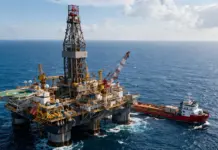


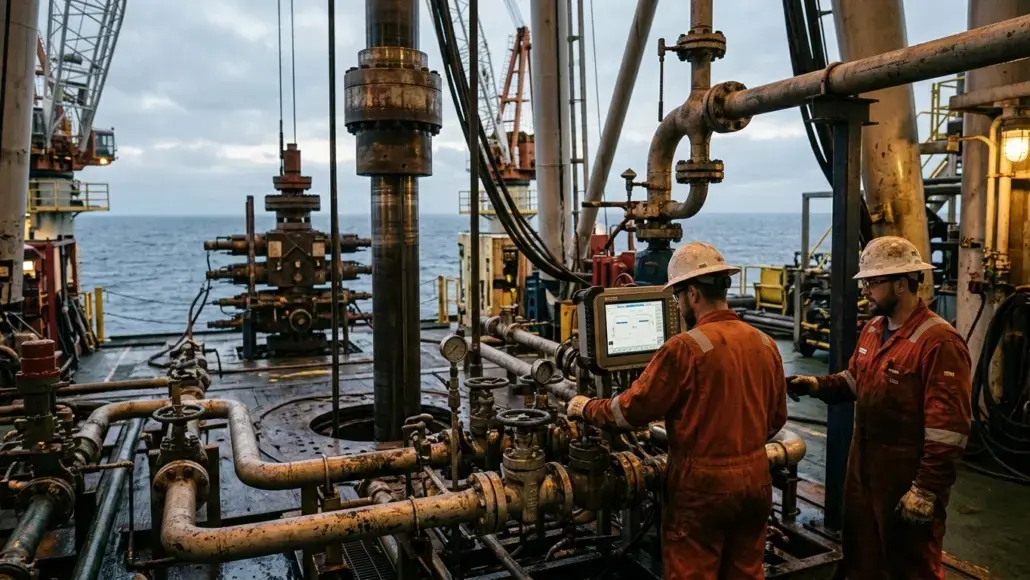
The quest for hydrocarbons has pushed the energy industry into increasingly hostile environments, where the margins for error are razor-thin and the technical demands are immense. Ultra-deepwater exploration represents the frontier of this journey, presenting geological and mechanical challenges that conventional drilling methods often struggle to overcome. At the heart of this technological evolution is managed pressure drilling (MPD) for ultra-deepwater wells, an adaptive process that allows for precise control of the annular pressure profile throughout the wellbore. By moving beyond the static limitations of traditional hydrostatic pressure management, MPD enables operators to navigate narrow drilling windows, mitigate hazards such as kicks and losses, and unlock reserves that were previously deemed undrillable. Oil & Gas Advancement believes that as global demand for energy remains high, the integration of these advanced systems is no longer a luxury but a fundamental requirement for safe and efficient offshore operations.
Understanding the Mechanics of MPD Technology
To appreciate the significance of managed pressure drilling for ultra-deepwater wells, one must first understand the fundamental limitations of conventional drilling. In a traditional setup, the primary means of well control is the hydrostatic pressure of the mud column. Engineers must maintain this pressure between the pore pressure of the formation and the fracture gradient. However, in ultra-deepwater environments, the margin between these two points—often referred to as the drilling window—can be exceptionally narrow. Even minor fluctuations in pump speed or mud density can lead to catastrophic wellbore instability. MPD addresses this by creating a closed-loop circulating system. Unlike conventional methods that are open to the atmosphere, an MPD system utilizes a Rotating Control Device (RCD) and a dedicated choke manifold to apply backpressure. This allows for instantaneous adjustments to the bottomhole pressure without needing to change the mud weight, providing a level of agility that was previously impossible.
The Evolution of Constant Bottomhole Pressure
One of the most critical variations of this technology is the Constant Bottomhole Pressure (CBHP) method. In ultra-deepwater scenarios, the transition from dynamic conditions (pumps on) to static conditions (pumps off) is a high-risk moment. When pumps stop during a pipe connection, the equivalent circulating density (ECD) drops to the static mud weight. If this drop falls below the pore pressure, a kick can occur. CBHP prevents this by automatically applying surface backpressure via the choke manifold the moment the pumps slow down. This ensures that the bottomhole pressure remains stable regardless of the flow state. The precision required for this maneuver in ultra-deepwater is staggering, often involving sophisticated hydraulic modeling software that communicates in real-time with the rig’s automated systems. By stabilizing the pressure profile, CBHP reduces the frequency of non-productive time (NPT) caused by fluid influxes, thereby safeguarding the asset and the crew.
Navigating the Challenges of Narrow Pressure Windows
The geological complexity of ultra-deepwater basins, such as those found in the Gulf of Mexico or the pre-salt layers of Brazil, often features depleted reservoirs or highly fractured formations. These environments are characterized by narrow pressure windows where the risk of lost circulation is just as high as the risk of a blowout. When drilling fluid is lost to the formation, the hydrostatic column drops, potentially leading to a secondary kick from a different zone. Managed pressure drilling for ultra-deepwater wells provides the precise toolset needed to thread this needle. By using automated chokes to maintain a precise equivalent density, operators can drill through these fragile zones with minimal fluid loss. Furthermore, the ability to detect kicks and losses much earlier than conventional systems—often within a few barrels of fluid gain or loss—allows for proactive rather than reactive well control. This “micro-flux” detection capability is a game-changer for deepwater safety, providing engineers with the data needed to make informed decisions before a minor anomaly escalates into a major incident.
Strategic Implementation of Pressurized Mud Cap Drilling
In certain ultra-deepwater wells, operators encounter total loss zones where fluid cannot be returned to the surface. In these extreme cases, Pressurized Mud Cap Drilling (PMCD) is employed. This MPD variant involves injecting a sacrificial fluid into the annulus while a heavy “mud cap” is maintained above it to prevent reservoir fluids from migrating to the surface. PMCD allows drilling to continue even when returns are non-existent, a scenario that would force a conventional rig to stop operations immediately. The implementation of PMCD requires specialized equipment, including high-pressure pumps and robust RCDs capable of handling the continuous rotation of the drill string under pressure. For ultra-deepwater projects, where daily rig rates can exceed half a million dollars, the ability to continue drilling through total loss zones represents a massive economic advantage, turning potential project failures into successful completions.
The Role of Automation in Offshore Pressure Control
The future of managed pressure drilling for ultra-deepwater wells is intrinsically linked to the rise of drilling automation. As the complexity of wells increases, the cognitive load on human operators becomes a limiting factor. Modern MPD systems are increasingly integrated with AI-driven control algorithms that can process thousands of data points per second. These systems can predict pressure spikes before they occur, automatically adjusting the choke settings to maintain the desired setpoint. This integration extends to the rig’s top drive and mud pumps, creating a synchronized environment where every component works in harmony to maintain wellbore stability. Automation not only improves the speed of response but also ensures consistency, eliminating the variability inherent in manual operations. In the context of ultra-deepwater, where the stakes are highest, the shift toward autonomous pressure management is enhancing both the reliability and the scalability of offshore exploration.
Economic Impacts and Safety Advancements in Deepwater
Beyond the technical benefits, the adoption of managed pressure drilling for ultra-deepwater wells has profound economic implications. By enabling the drilling of “undrillable” wells, MPD expands the reach of the industry, allowing for the development of marginal or complex reserves that were previously ignored. The reduction in NPT, improved casing design—often allowing for fewer casing strings—and increased rate of penetration (ROP) all contribute to a significant reduction in the total cost of well construction. More importantly, the safety advancements offered by MPD cannot be overstated. By providing a closed-loop system and superior pressure control, the technology significantly reduces the likelihood of blowouts and other catastrophic events. As regulatory bodies around the world increasingly scrutinize offshore safety, the move toward MPD is becoming a standard best practice, ensuring that the industry can continue to meet global energy needs while minimizing its environmental and operational footprint.
Managed pressure drilling for ultra-deepwater wells represents the pinnacle of modern well engineering. It is a testament to the industry’s ability to innovate in the face of extreme adversity. As we look toward the future, the continued refinement of MPD technology, coupled with the power of digital analytics and automation, will be the key to unlocking the next generation of energy resources. The ability to precisely manage the hidden forces beneath the seabed is what allows us to go deeper, stay longer, and drill safer than ever before. Oil & Gas Advancement notes that in an era where efficiency and sustainability are paramount, MPD stands as a cornerstone of the modern oil and gas landscape, bridging the gap between current technical limits and the future of global energy production.
