






In the dynamic landscape of global energy, the quest for agile, cost-effective, and secure energy solutions has never been more pressing. Amidst this evolving environment, Floating Storage and Regasification Units, or FSRUs, have emerged not merely as an alternative, but as a pivotal innovation, fundamentally reshaping the global LNG market. These sophisticated marine vessels represent a paradigm shift in how natural gas can be imported and integrated into national energy grids, offering a flexibility and speed that conventional land-based LNG import terminals often struggle to match. The rise of FSRU LNG infrastructure marks a new frontier in global energy, promising to democratize access to natural gas and enhance energy security for nations across the globe.
Unpacking the Core of FSRU Technology and Operation
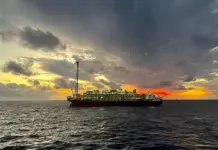
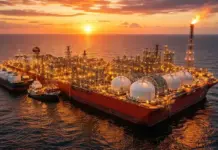
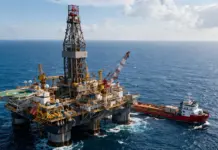
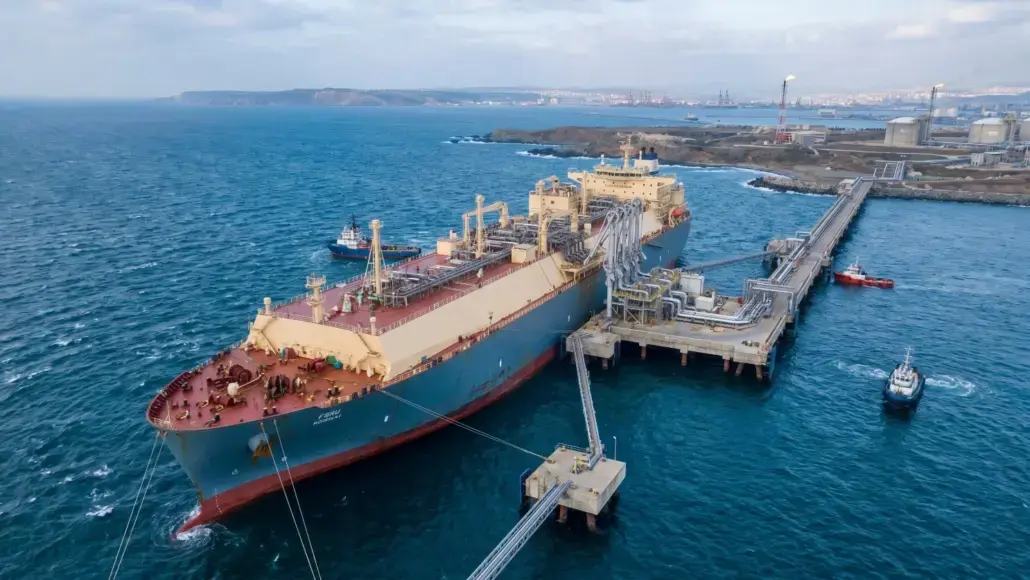
At its heart, an FSRU is a specialized ship equipped with the technology to receive, store, and then convert super-cooled liquefied natural gas (LNG) back into its gaseous state. This process, known as regasification, is crucial for integrating LNG into existing natural gas pipelines. Unlike traditional land-based regasification plants, a floating storage and regasification unit offers an inherently mobile and adaptable solution. A typical FSRU arrives at a designated offshore location, often moored permanently or semi-permanently, and connects to an onshore pipeline network via a subsea pipeline or a direct mooring system.
The Journey of LNG through an FSRU
The journey of LNG through an FSRU begins with the arrival of LNG carrier vessels. These carriers transfer their cargo of LNG, chilled to approximately -162 degrees Celsius, to the FSRU’s insulated storage tanks. The FSRU then acts as a floating storage unit, capable of holding significant volumes of LNG. When regasification is required, the FSRU’s onboard regasification technology comes into play. Heat exchangers, typically utilizing seawater, are employed to warm the LNG, causing it to revert to its gaseous form. This natural gas is then pressurized and offloaded through the pipeline connection to the onshore grid, ready for distribution to homes, industries, and power plants. The modular and self-contained nature of a floating LNG terminal like an FSRU significantly streamlines the entire import process, minimizing the complexity often associated with large-scale energy infrastructure projects.
The Strategic Imperatives Driving FSRU Adoption
The rapid proliferation of FSRUs worldwide is not coincidental; it is a direct response to several compelling strategic and economic imperatives. These units offer a suite of advantages that address critical needs in today’s volatile energy markets, positioning them as a cornerstone of modern energy infrastructure.
Economic Efficiencies and Rapid Deployment
One of the most significant benefits of FSRUs is their ability to deliver LNG import capacity much faster and often more affordably than traditional land-based facilities. Constructing a conventional onshore LNG import terminal can take upwards of five to ten years and involve multi-billion-dollar investments, coupled with extensive permitting and site preparation challenges. In contrast, an FSRU project can often be operational within two to three years, sometimes even less if an existing vessel is converted or readily available. This speed is invaluable for nations facing urgent energy supply gaps or seeking to quickly diversify their energy mix. The capability for fast-track LNG projects is perhaps the most defining characteristic of FSRU deployments, enabling governments and energy companies to bypass years of complex onshore development, bringing energy online within months rather than decades. Furthermore, the capital expenditure for an FSRU project is typically lower, as the core infrastructure is pre-built and transported to the site. This significantly reduces upfront financial risk and makes LNG access attainable for a broader range of economies. The flexibility to lease FSRUs rather than outright purchase also offers an attractive financial model, further democratizing access to this crucial energy resource and enabling more targeted LNG infrastructure investment without long-term capital lock-in.
Enhanced Energy Security and Supply Resilience
The geopolitical landscape underscores the critical importance of energy security. FSRUs play a vital role in enhancing this security by enabling nations to quickly establish or expand their natural gas imports from a diverse range of suppliers. By not being tied to a fixed pipeline infrastructure from a single source, countries utilizing FSRUs can procure LNG from the global spot market, ensuring greater flexibility and resilience against supply disruptions. This ability to tap into multiple global LNG markets for their natural gas imports reduces dependence on specific pipeline routes or politically sensitive energy providers, thereby bolstering national energy security. For island nations or landlocked countries with coastal access, FSRUs can provide a primary gateway for natural gas, transforming their energy outlook. The rapid deployment capabilities mean that in times of crisis or sudden demand spikes, a floating LNG terminal can be deployed to provide immediate relief, reinforcing the stability of energy supplies and often serving as a critical backup for conventional energy systems.
Environmental and Logistical Adaptability
FSRUs also offer notable environmental and logistical advantages. Their offshore positioning minimizes the need for extensive onshore land acquisition and reduces the environmental footprint associated with large-scale industrial complexes on land. This can be particularly beneficial in densely populated coastal areas or regions with sensitive ecosystems where land is scarce or environmentally protected. Moreover, the modular nature of FSRUs means they can be relocated to different sites if energy needs shift, providing an unparalleled level of logistical adaptability. This mobility mitigates the risk of stranded assets and allows for dynamic response to changing market conditions or regional demand fluctuations. The integration of advanced regasification technology also ensures efficient operations, minimizing energy losses during the conversion process and contributing to overall operational sustainability.
Navigating the Nuances: Challenges and Considerations
While the advantages of FSRU LNG infrastructure are profound, it is important to acknowledge the inherent challenges and considerations associated with their deployment and operation. No technological solution is without its complexities, and FSRUs are no exception.
Operational Complexities and Infrastructure Interfacing
Operating a sophisticated marine vessel that also functions as an industrial processing plant presents unique operational challenges. The continuous maintenance of complex regasification technology, alongside standard maritime operations, requires highly skilled personnel and robust operational protocols. Connecting an FSRU to existing onshore pipeline networks also demands careful planning and execution, encompassing detailed engineering, environmental impact assessments, and securing necessary permits. The integration points – including subsea pipelines, mooring systems, and onshore receiving facilities – must be meticulously designed and maintained to ensure safe and efficient gas flow. Furthermore, the FSRU’s presence in port areas or coastal waters necessitates adherence to stringent maritime safety regulations and environmental standards, posing continuous management requirements for operators. While the initial deployment can be fast, the long-term operational excellence relies on continuous oversight and technical expertise.
Market Dynamics and Investment Horizons
The global LNG market, while offering flexibility, is also subject to price volatility, influenced by geopolitical events, supply-demand balances, and global economic trends. Nations relying heavily on spot market LNG procured via FSRUs must be prepared to navigate these fluctuations, potentially requiring hedging strategies or long-term supply agreements to mitigate financial risk and ensure stable pricing. While initial capital expenditure for an FSRU project may be lower than a land-based terminal, the operational expenses, including fuel for auxiliary systems, ongoing maintenance, and potentially chartering costs, must be factored into the overall economic assessment. Crucially, successful FSRU integration requires holistic LNG infrastructure investment across the entire value chain, from upstream liquefaction and shipping to downstream distribution networks. This ensures that the gas delivered by the FSRU can efficiently reach its end-users. Policy stability and robust regulatory frameworks that support long-term energy planning are also crucial for attracting the necessary financing for these projects and for ensuring their sustained contribution to national energy portfolios.
The Horizon Ahead: Sustaining the Momentum of FSRU LNG Infrastructure
Looking forward, the role of FSRUs in the global energy matrix appears set for continued expansion. As more nations seek to diversify their energy sources and reduce reliance on more carbon-intensive fuels, natural gas, as a vital bridge fuel in the energy transition, will remain in high demand. The inherent advantages of FSRUs in terms of speed, flexibility, and cost-effectiveness position them as a preferred solution for countries aiming to quickly scale up their natural gas imports.
Innovation and Integration into a Decarbonizing World
Innovation in regasification technology and vessel design continues to enhance the efficiency and environmental performance of FSRUs. Future units may incorporate more advanced energy recovery systems, potentially utilizing the cold energy of LNG for power generation or industrial cooling, or integrate with renewable energy sources for auxiliary power, further reducing their carbon footprint. The ability to quickly respond to geopolitical shifts and market demands means that FSRUs will continue to be a linchpin in ensuring global energy stability, particularly as the global LNG market continues its robust expansion. They are not just temporary fixes but increasingly integral components of long-term national energy strategies, particularly in regions with growing energy demand or constrained conventional infrastructure, illustrating a growing trend in LNG infrastructure investment towards more adaptable solutions. Their capacity to support developing economies and provide energy access to underserved regions highlights their critical role in achieving broader energy equity.
Conclusion: Redefining the Gateway to Natural Gas
Floating Storage and Regasification Units represent a transformative force in the global energy sector. Their capacity to deliver fast-track LNG projects, reduce development costs, and significantly enhance national energy security makes them an indispensable asset in today’s complex world. By enabling rapid establishment of LNG import terminals and fostering greater access to the global supply of natural gas, FSRUs are not merely facilitating trade; they are empowering nations with greater energy independence and resilience. As the world continues its complex energy transition, navigating fluctuating demands and supply dynamics, the strategic importance of FSRU LNG infrastructure will only grow, cementing its position as a new frontier in global energy and a vital component of a secure and adaptable energy future.
