








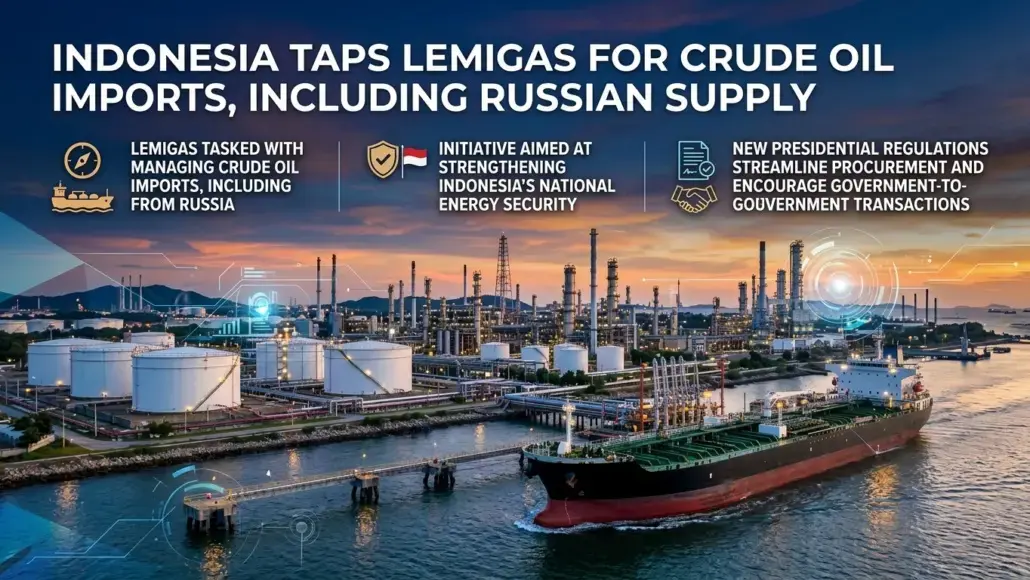
The Energy and Mineral Resources Minister of Indonesia, Bahlil Lahadalia, has officially assigned the oil and gas testing center, Lemigas, the responsibility of undertaking oil imports, including Russian crude oil imports.
This assignment is a direct outcome of Indonesia’s commitment to acquire 150 million barrels of Russian crude oil in stages, with the process expected to continue through to the end of 2026. This development regarding Russian crude oil imports marks a diplomatic achievement following Indonesian President Prabowo Subianto’s recent visit to Russia.
Speaking at a press conference held at the Parliament Complex in Jakarta on 8th June 2026, Lahadalia referenced Presidential Regulation No. 26 of 2026. This regulation specifically governs the procurement of crude oil, fuel oil, and liquefied petroleum gas (LPG), with the overarching goal of enhancing national energy security. The minister elaborated that through this regulation, the President’s intention is for energy imports to be managed by a public service agency, a role that Lemigas will now fulfill.
Lahadalia indicated that immediate coordination with Lemigas would commence to prepare for the implementation of these Russian crude oil imports. The primary objective behind empowering Lemigas in managing energy imports is to shorten and simplify the existing processes. Furthermore, this approach is designed to facilitate government-to-government transactions, which can then be followed by collaborations with business entities.
This strategy is detailed in Article 4, paragraph (3) of the aforementioned 2026 presidential regulation. It stipulates that imports undertaken by public service agencies within the energy sector must be conducted in accordance with established cooperation agreements. These provisions encompass both intergovernmental agreements and direct deals between the government and foreign suppliers.
In parallel, Article 5 of the regulation provides a degree of flexibility for the state-run oil and gas company, Pertamina, and other energy agencies. This allows them to proceed with imports during emergency situations, even if prices vary based on factors such as volume, product specifications, country of origin, and delivery timelines, provided they align with contractual agreements.
