












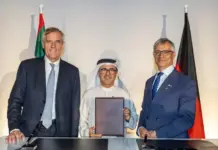






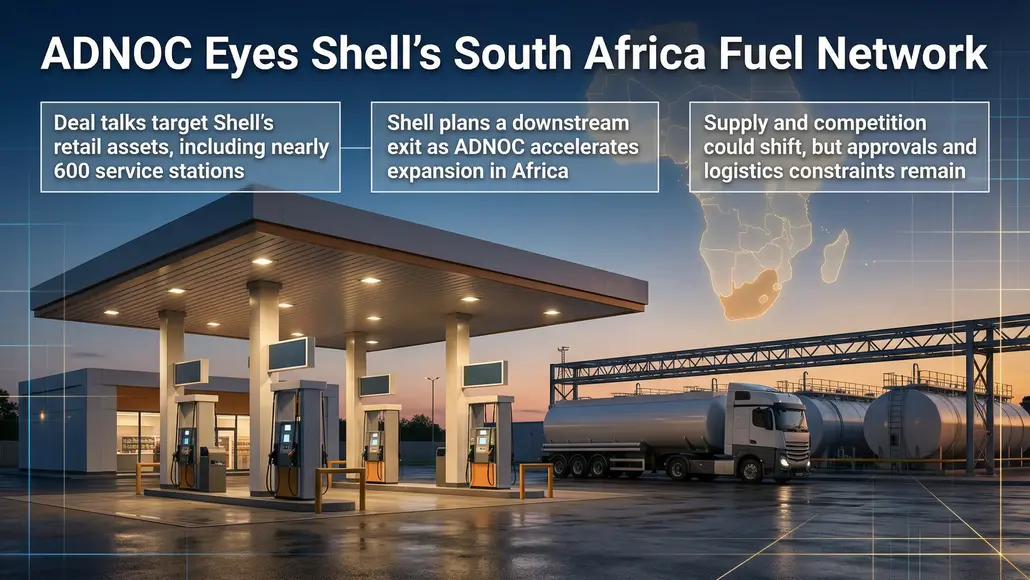
The Abu Dhabi National Oil Company (ADNOC) is engaged in advanced negotiations to acquire Shell’s South African retail network fuel assets in a transaction estimated at about US$1bn. The proposed acquisition covers close to 600 service stations, accounting for nearly 10% of the country’s fuel retail market. If finalized, the move would establish ADNOC’s presence in one of Africa’s most developed downstream markets through the buying of Shell’s South Africa retail network.
According to sources, ADNOC has emerged as the preferred bidder after earlier talks between Shell and Gunvor Group did not result in an agreement. While discussions are ongoing, a final outcome could be reached within the current quarter, though no official confirmation has been issued by either party. Shell’s planned withdrawal from South Africa’s downstream fuel sector will bring to a close more than 120 years of operations in the country, as the company refocuses its global portfolio toward upstream oil and gas exploration and production. This strategic shift aligns with broader trends among international oil majors, while opening the door for ADNOC to establish a South Africa retail network as part of its international growth plans.
For ADNOC, the acquisition is consistent with its wider expansion strategy, supported by a commitment of up to US$150bn in capital expenditure by 2030 aimed at strengthening its global energy footprint. Africa is increasingly viewed as a priority region, and the addition of a South Africa retail network would significantly enhance the company’s downstream capabilities. The deal is expected to influence the country’s fuel supply chain and competitive environment, although regulated petrol prices under the Department of Mineral and Petroleum Resources mean immediate changes at the pump are unlikely. Diesel pricing, however, remains unregulated, potentially allowing for more competitive strategies within the acquired network.
South Africa’s reliance on imported refined fuels has grown following refinery closures such as the SAPREF refinery, raising concerns about supply stability. ADNOC’s integrated refining and trading operations could help reinforce supply channels and reduce exposure to import parity pricing pressures. The transaction also reflects shifting market dynamics, with Middle Eastern state-backed companies expanding their footprint across Africa, following similar interest from Saudi Aramco. However, regulatory approvals, including clearance from the Competition Commission and adherence to Black Economic Empowerment requirements, remain necessary. Additionally, BP’s pre-emption rights over a key storage terminal in Durban may influence logistics planning and could necessitate further infrastructure investment if the South African Retail Network acquisition deal proceeds.
