





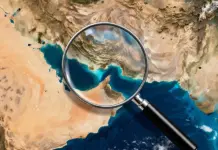





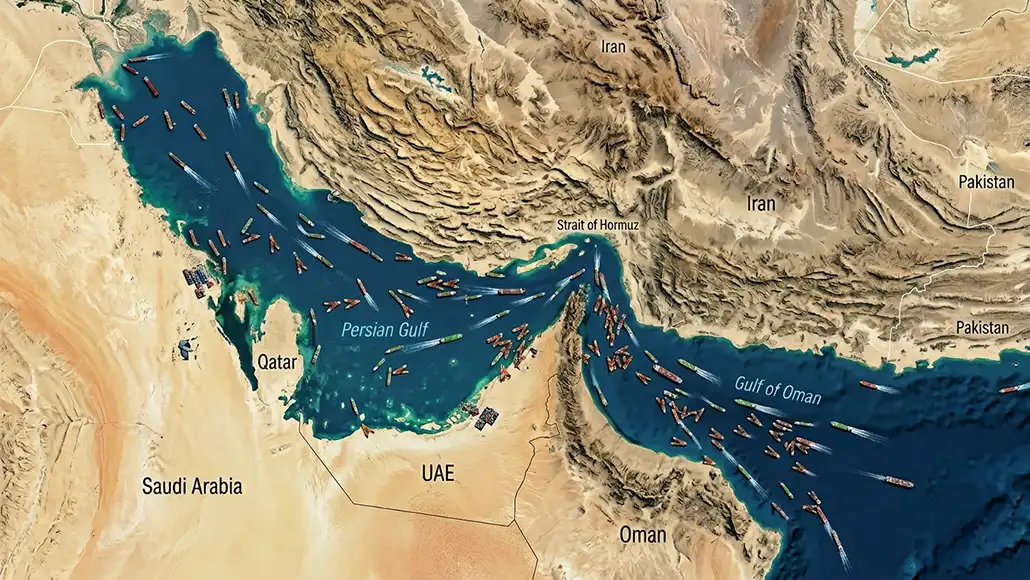
Global oil markets were jolted on 2nd March, 2026 as the Strait of Hormuz closure sent oil and fuel prices surging sharply. The disruption followed the US-Israeli strikes that killed Iran’s Supreme Leader, Ayatollah Ali Khamenei. Iran’s Islamic Revolutionary Guard Corps (IRGC) informed vessels that passage through the strategic waterway was prohibited.
It is noteworthy to mention that this corridor carries around 20% of the world’s oil and gas. Every year, almost $500 billion worth of energy trade crosses the Strait of Hormuz. Additionally, ships transport fertilizers and chemicals, so a prolonged disruption might have an impact on global food prices and agriculture.
At least three ships were attacked near the strait over the weekend, intensifying concerns over the stability of global supplies. Two ships were struck by unknown projectiles, while another experienced an explosion nearby. The crew was reported safe.
Shipping activity in the region slowed dramatically. Around 150 tankers dropped anchor beyond the strait’s entrance, although some Iranian and Chinese vessels reportedly continued transit. Ship-tracking platform Kpler confirmed the effective blockade. The UK Maritime Trade Operations Centre (UKMTO) cited “multiple security incidents” and urged vessels to “transit with caution.”
The Strait of Hormuz closure threatens refined product flows from Saudi Arabia, the United Arab Emirates, Kuwait and Iran, which collectively account for significant shares of global diesel, jet fuel and fuel oil exports. Goldman Sachs noted that refined product exports through the strait averaged 3.5 million barrels a day last year. Meanwhile, OPEC+ agreed to raise output by 206,000 barrels a day in April, surpassing the previously expected 137,000 barrels. The group feels this increase might compensate for the current disruption in supply. Analysts, however, are doubtful whether this move will be able to counter the effects of a long disruption. Global oil prices could rise exponentially if the Strait of Hormuz closure persists, leaving markets on edge with no timeline for reopening.
