





Key Takeaways:
- The increasing reliance on floating production systems is fundamentally changing the landscape of offshore project development by allowing operators to bypass the logistical and financial barriers associated with traditional fixed infrastructure. Through the use of FPSO systems and other sophisticated offshore floating platforms, companies can now access remote deepwater production sites that were previously considered unreachable, ensuring a more resilient and adaptable global energy supply chain.
- Modern floating facilities offer unparalleled flexibility in deployment, enabling the rapid development of marginal fields and the easy relocation of assets once a reservoir is depleted. This adaptability significantly improves project economics by reducing the initial capital expenditure and shortening the time to first oil or gas, making floating production systems an essential component of strategic planning in today’s volatile and fast-paced energy market.
The architecture of global offshore energy development has been fundamentally altered by the advent and evolution of floating production systems. As the industry moves further away from the coastline and into the profound depths of the world’s oceans, the technical and economic limitations of traditional fixed-bottom platforms have become increasingly apparent. In response, floating facilities have emerged as the dominant solution for modern maritime energy extraction. These systems, ranging from the ubiquitous FPSO systems to sophisticated semi-submersibles and spars, provide the necessary stability, storage, and processing capabilities to operate in thousands of meters of water. The strategic shift toward floating production is not merely a technical necessity but a comprehensive reimagining of how offshore projects are conceptualized, financed, and executed.
The primary appeal of floating production systems lies in their inherent versatility. Unlike fixed platforms, which are permanently anchored to the seabed and custom-built for a specific location, floating assets can be designed with a degree of modularity and portability. This flexibility is a critical factor in offshore project development, particularly in regions with limited infrastructure or where the lifespan of a particular reservoir is relatively short. The ability to lease a floating production unit, deploy it to a field, and then relocate it once production ceases, has revolutionized the economics of the industry, allowing for the profitable development of “marginal” fields that would otherwise remain untapped.
The Dominance of FPSO Systems in Modern Deepwater Production
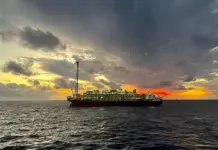
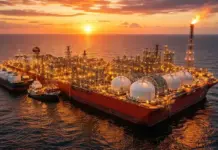
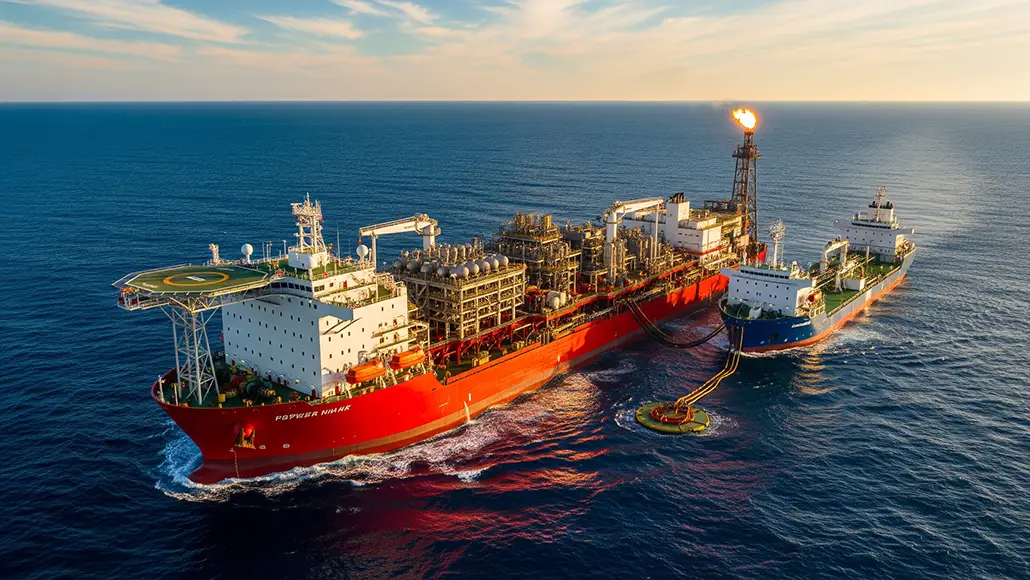
Among the various types of floating production systems, the Floating Production Storage and Offloading (FPSO) system has become the industry standard. An FPSO is essentially a large tanker, either purpose-built or converted, equipped with a comprehensive processing plant on its deck. It receives fluids from subsea wells, separates the oil, gas, and water, and stores the processed oil in its hull until it can be offloaded to a shuttle tanker for transport to shore. This integrated approach eliminates the need for expensive subsea pipelines to land, which is a major advantage for remote deepwater production projects located hundreds of kilometers from the coast.
The technical complexity of modern FPSO systems is staggering. They must be able to remain on station for decades, withstanding extreme weather events and continuous oceanic movement, all while maintaining precise processing conditions. The mooring systems whether spread-moored or using a sophisticated turret that allows the vessel to “weathervane” around its anchors are masterpieces of marine engineering. Furthermore, the integration of subsea tie-backs to multiple satellite wells allows a single FPSO to serve as a hub for an entire offshore field, maximizing the efficiency of the surface infrastructure and improving the overall project economics.
Exploring Diversity in Offshore Floating Platforms
While FPSOs are the most common, other types of offshore floating platforms play vital roles in specific environments. Tension Leg Platforms (TLPs), for example, use vertical, tensioned tendons to connect the floating hull to the seabed, virtually eliminating vertical motion. This makes them ideal for projects that require surface-mounted wellheads (dry trees), which are easier and cheaper to maintain than subsea wells. Spar platforms, characterized by a deep, cylindrical hull that extends far below the water line, offer exceptional stability in the face of high winds and waves, making them a preferred choice for the challenging conditions of the Gulf of Mexico.
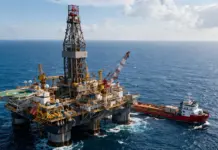
Semi-submersible production units represent another critical category of floating production systems. These vessels use large, submerged pontoons to provide buoyancy and stability, with the main work deck elevated well above the waves. Semi-submersibles are highly versatile and can be used for both drilling and production operations. Their large deck area allows for the installation of extensive processing equipment, and their mobility makes them well-suited for temporary or seasonal operations. The choice between these various floating facilities depends on a complex interplay of water depth, reservoir characteristics, environmental conditions, and the specific economic goals of the offshore project development.
The Strategic Impact on Project Economics and Time-to-Market
The adoption of floating production systems has a profound impact on the financial profile of an offshore project. One of the most significant benefits is the reduction in initial capital expenditure (CAPEX). By utilizing leased vessels or converted tankers, operators can avoid the massive up-front costs associated with designing and constructing a permanent fixed platform. This shift from CAPEX to operational expenditure (OPEX) can make a project much easier to finance, particularly for smaller independent energy companies. Additionally, the shorter construction and deployment times for floating assets allow for a faster “time-to-first-oil,” significantly improving the project’s net present value (NPV).
Furthermore, the “resale” or “re-deployment” value of floating facilities provides an important hedge against the risks of reservoir underperformance. If a field fails to meet its production targets, a floating unit can be disconnected and moved to a more promising location, recovering a significant portion of the investment. This is in stark contrast to fixed infrastructure, which becomes a stranded asset if the reservoir is depleted prematurely. This inherent flexibility is a key driver of the continued growth in the floating production market, as it allows for more agile and risk-responsive development strategies in an increasingly uncertain global energy landscape.
Technological Advancements in Floating Processing and Storage
The capabilities of floating production systems are being constantly expanded by technological innovation. One of the most significant trends is the movement toward “all-electric” topsides, which replace traditional hydraulic and gas-powered systems with more efficient and controllable electrical alternatives. This reduces the weight and footprint of the processing equipment, a critical consideration for floating vessels where deck space is at a premium. Additionally, advancements in subsea processing such as subsea separation and boosting are reducing the workload on the floating facility, allowing it to handle higher volumes of fluids from more distant wells.
Digitalization is also playing a transformative role in the management of floating facilities. The use of digital twins allows operators to monitor the structural health and processing performance of the vessel in real-time from an onshore control center. Predictive maintenance algorithms can identify potential equipment failures before they occur, reducing the risk of unplanned downtime and environmental incidents. For FPSO systems, sophisticated cargo management software optimizes the offloading process, ensuring that storage capacity is maximized and that shuttle tankers are used as efficiently as possible. These digital tools are essential for maintaining the high levels of reliability and safety required for deepwater production.
The Environmental Footprint of Floating Production
As the energy industry faces increasing pressure to reduce its carbon footprint, the environmental performance of floating production systems has come under intense scrutiny. Modern floating facilities are being designed with a focus on energy efficiency and emission reduction. This includes the use of waste-heat recovery systems, more efficient gas turbines, and the elimination of routine flaring. Some operators are even exploring the possibility of powering their floating platforms with renewable energy, such as offshore wind or subsea power cables from shore, as part of their broader oil and gas decarbonization strategies.
The management of produced water and chemical discharges is another critical environmental concern for floating production. Advanced onboard treatment systems ensure that any water returned to the ocean meets the most stringent environmental standards. Furthermore, the compact and integrated nature of floating facilities often results in a smaller “footprint” on the seabed compared to complex networks of fixed platforms and subsea pipelines. By minimizing the environmental disturbance associated with offshore project development, floating production systems are helping the industry to meet its sustainability goals while still providing the energy the world needs.
Conclusion: The Future of Offshore Energy is Floating
In conclusion, floating production systems have become the indispensable backbone of the modern offshore energy sector. By enabling deepwater production, providing flexible deployment options, and significantly improving project economics, these versatile floating facilities are shaping the future of maritime energy development. The ongoing evolution of FPSO systems and other offshore floating platforms is a testament to the industry’s ability to innovate and adapt in the face of immense technical and economic challenges. As the global energy transition continues to unfold, the role of floating systems will only grow in importance, providing a resilient and efficient platform for both traditional and renewable energy projects.
The successful execution of future floating production projects will require a continued commitment to collaboration, standardization, and technological excellence. By sharing lessons learned across the industry and investing in the next generation of engineers and technicians, the offshore sector can ensure that floating systems continue to deliver safe, reliable, and sustainable energy for decades to come. The journey from the first experimental floating units to the massive, high-tech vessels of today has been remarkable, but the full potential of floating production systems is still being unlocked. The horizon of offshore energy is no longer a limit, but a new frontier defined by the ingenuity of those who build and operate these incredible machines.
