




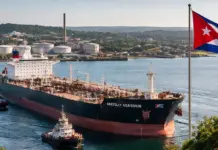















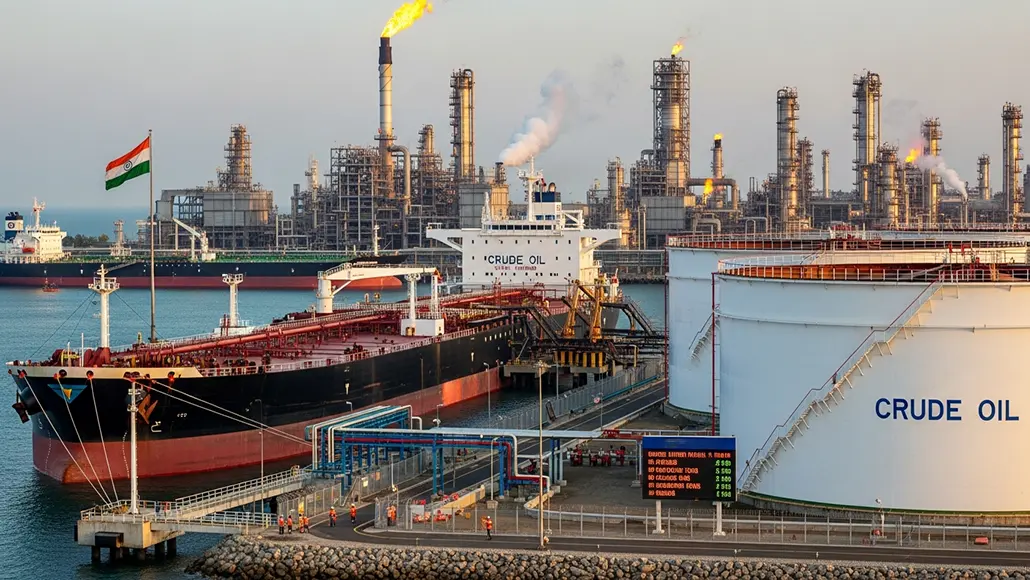
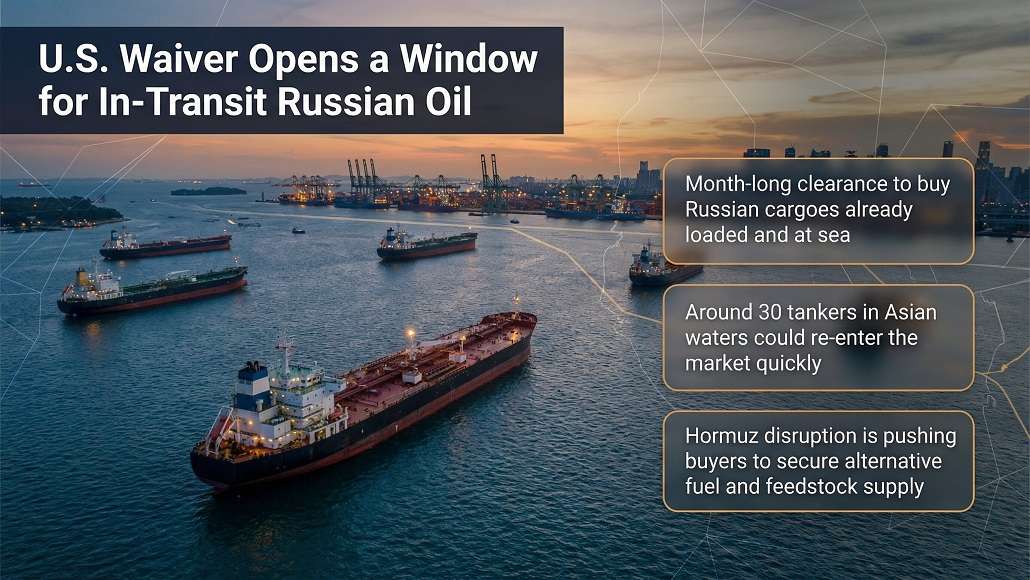
A fleet of tankers carrying Russian oil in Asian waters may soon find buyers after the U.S. issued a temporary waiver permitting the purchase of cargoes that were already in transit. According to shipping data, roughly 30 vessels are currently transporting crude and refined fuel, including 19 million Russian barrels, which could now be marketed following the policy shift. The shipments also include about 310,000 tons of refined products, mainly naphtha used in plastics manufacturing, along with some diesel. Demand for these fuels has intensified as prices surged after Iran effectively closed the Strait of Hormuz, disrupting one of the world’s most important energy corridors. The availability of 19 million Russian barrels on vessels in Asian waters has therefore drawn attention from buyers seeking alternative supply during the disruption.
Among the ships carrying crude, about 25 vessels are loaded with Russian grades including Sokol, currently positioned near China, while others in the Arabian Sea are carrying the medium-sour Urals blend. Shipping signals show many of the vessels marked “for orders,” indicating that a final destination has yet to be determined. Some ships are broadcasting routes toward Singapore or Malaysia, locations where tankers frequently anchor while traders seek buyers and negotiate sales. The presence of 19 million Russian barrels aboard these ships reflects a significant volume of oil that could enter the market if deals are secured during the waiver period.
The opportunity emerged after the U.S. Treasury approved a month-long waiver allowing the import of Russian oil that had already been loaded before Thursday. The measure expands a previous arrangement under which Indian refiners had purchased sanctioned Russian crude. The latest decision arrives at a time when hundreds of vessels carrying crude and refined fuels such as diesel and jet fuel remain stranded near the Strait of Hormuz, unable to move freely because of the ongoing regional conflict. As a result, the presence of 19 million Russian barrels on tankers in nearby waters has become a potentially important supply option for importers facing tightening markets.
Energy analysts say the waiver offers temporary relief for countries trying to manage the shock caused by disruptions in the Middle East. The U.S. decision is “buying countries and refiners time to cope with the Mideast supply shock,” said Muyu Xu, senior crude analyst at Kpler Ltd.
In recent years, China and India have remained among the few major buyers of Russian crude and petroleum products, often acquiring them at discounted prices following U.S. sanctions designed to restrict Moscow’s access to funding for the war in Ukraine. Meanwhile, other significant importers such as Japan and South Korea have largely avoided purchasing Russian barrels.
