




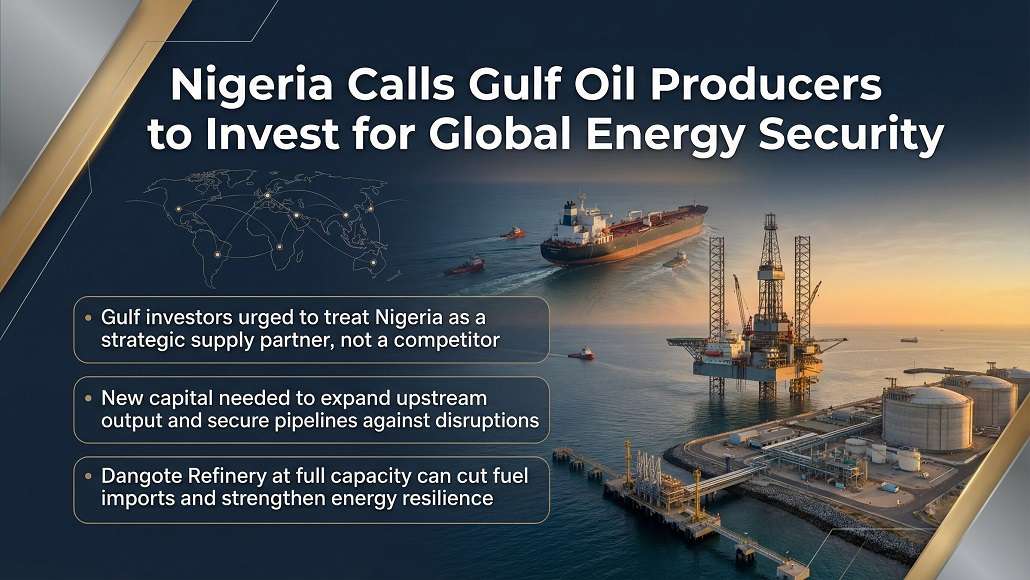
Nigeria is urging Gulf nations to deepen investment from oil producers in its energy sector as geopolitical tensions threaten global supply routes. Minister of Foreign Affairs, Yusuf Tuggar, said oil and gas producers in the Gulf should view Nigeria not as a competitor but as a strategic partner capable of supporting global energy markets during periods of instability. His appeal comes as tensions in the Middle East disrupt shipments moving through the Strait of Hormuz, a vital passage that carries roughly one-fifth of global oil supply. The conflict involving Iran and regional powers has already led some exporters to halt shipments and created volatility in global oil prices, prompting renewed calls for investment from oil producers in alternative supply sources.
Speaking on the situation, Tuggar pointed to Nigeria’s vast untapped oil and gas reserves as an opportunity for Gulf partners seeking to reduce exposure to supply disruptions. According to the minister, greater investment from oil producers could help expand Nigeria’s production capacity while strengthening global energy security. Nigeria, Africa’s largest oil producer, has faced years of underinvestment alongside persistent challenges such as crude theft and pipeline vandalism, factors that have limited output growth. Tuggar said production has recently begun to improve, noting that Nigeria’s total crude production has risen to about 1.7 million barrels per day, compared with around 1.4 million barrels per day when President Bola Tinubu assumed office in 2023. He added that further growth would depend on new capital flowing into upstream projects and pipeline infrastructure, reinforcing the importance of sustained investment from oil producers.
Nigeria has been working to strengthen economic ties with Gulf countries as part of a broader push to attract foreign capital into its energy industry. In January, the country signed a Comprehensive Economic Partnership Agreement with the United Arab Emirates, which Abuja expects could expand trade and unlock new investment opportunities. At the same time, investors connected to Qatar have announced plans to support development in Nigeria’s gas sector, though timelines and implementation details for those projects remain uncertain. Energy analysts caution that many investment commitments in Nigeria often encounter long regulatory approval processes and operational risks before moving into development.
Tuggar acknowledged that Nigeria has also been affected by higher global oil prices despite being a major producer because the country continues to import significant volumes of refined petroleum products. However, the privately owned Dangote Refinery is now operating at its nameplate capacity of about 650,000 barrels per day, which industry participants say is sufficient to meet most domestic fuel demand. The minister emphasised that hydrocarbons will remain an essential component of the global energy mix for years to come, even as renewable energy investment expands, stressing that international cooperation is necessary to ensure adequate hydrocarbon resources remain available.
