








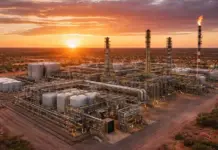





Croatian energy company INA has finalized the Rijeka Refinery upgrade project, marking the largest single investment in the company’s history and one of the most significant industrial undertakings in modern Croatia. The development, which required nearly 700 million euros in funding, represents a major milestone for the country’s refining sector. Completion of the Rijeka Refinery upgrade project enables the facility to operate with expanded capabilities and improved efficiency as the company modernizes its downstream infrastructure.
A central component of the Rijeka Refinery upgrade project is the installation of a new Delayed Coking Unit along with supporting processing facilities. With these additions, the refinery can now process up to four million tons of crude oil annually, including heavier crude grades. The upgraded configuration is designed to optimize refining operations, allowing the plant to generate greater volumes of high-value petroleum products from the same amount of crude input. As a result, diesel production at the facility is expected to increase by approximately 30 per cent. Another operational change brought by the project is the elimination of the need to import vacuum gas oil (VGO), which was previously sourced largely from Russian origin.
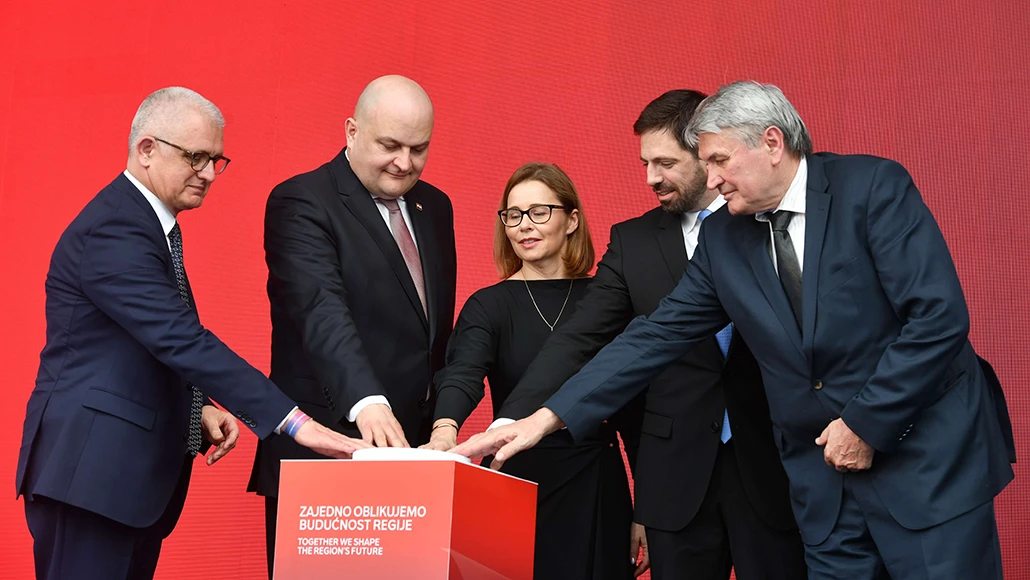
The scale of construction involved in the Rijeka Refinery upgrade project was substantial. The refinery’s new units required more than 10,000 tons of steel, along with approximately 60,000 cubic meters of concrete. The completion ceremony was attended by representatives from the Croatian and Hungarian governments, ambassadors, members of local communities, and executives from INA and MOL Group, highlighting the national and regional significance of the project.
Ahead of the ceremony, INA also signed a 15-million-euro grant agreement under the National Recovery and Resilience Plan for the construction of a green hydrogen plant at the refinery site. As part of this initiative, the company plans to invest more than 60 million euros in a 10-megawatt (MW) electrolyser and an 11 MW solar plant. The hydrogen produced will be used both in transportation and refinery operations. Completion of the hydrogen facility is planned for the end of 2026, with production expected to begin in 2027.
Commenting on the development, Zsuzsanna Ortutay, President of the Management Board of INA, stated that the refinery will facilitate the company’s transition to a lower-carbon economy.” Croatian Minister of Economy Ante Šušnjar also addressed the project, expressing hope that the Rijeka Refinery will “operate stably, sustainably, and at full capacity, benefitting Croatia’s economy, energy system, and our partners in the region.”
