





Azerbaijan President Ilham Aliyev and President of Serbia Aleksandar Vucic are coming closer than ever, all thanks to energy security, sovereignty, and strategic trust.
Notably, the first meeting of the Strategic Partnership Council in Belgrade did mean more than just a diplomatic warmth – it actually marked a move that one may call deliberate to firm up Azerbaijan-Serbia relations when it comes to long-term energy investment along with political coordination as well as economic integration. From a planned 500-megawatt gas-fired power plant located near Nish to much-widened gas exports and renewable energy cooperation, as well as food security agreements, both countries are indeed portraying themselves as dependable partners in this volatile European landscape.
United due to a shared emphasis on statehood and sovereignty along with mutual support across international forums, both Baku and Belgrade are indeed transforming their political goodwill into infrastructure, strategic leverage, and capital flows.
The inaugural session of the Azerbaijan–Serbia Strategic Partnership Council in Belgrade was pretty organized, however strategically serious. Held on the Statehood Day of Serbia, the symbolism was indeed unmistakable. President Aleksandar Vucic called the meeting a turning point, whereas President Ilham Aliyev highlighted sincerity and continuity. Behind the language of friendship indeed lay a very clear political and economic agenda.
At its center, this was more about energy and sovereignty as well as trust.
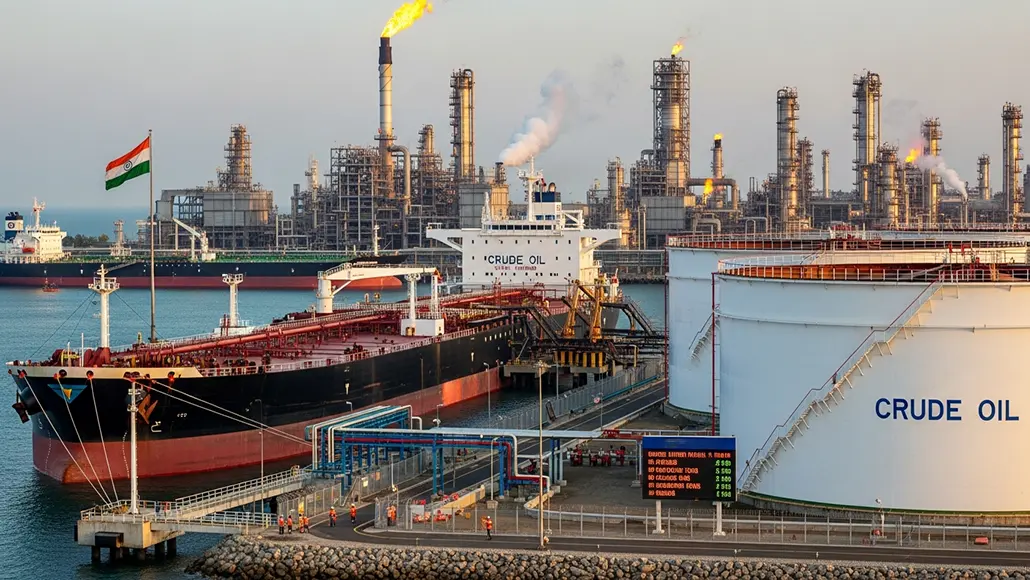
The most consequential result of the visit was an agreement pertaining to the design and construction as well as the operation of a 500-megawatt gas-turbine power plant located in Serbia. To be jointly looked into at a presidential level, the project goes on to represent one of the most prominent investments made by Azerbaijan in Europe in recent years.
When it comes to Serbia, the logic happens to be urgent. Vucic repeatedly said that Europe is indeed entering what, according to him, is the era of electricity. Due to the fact that the demand is rising and data centres expanding along with industrial modernization underway, Belgrade is looking out for a dependable baseload power. The planned plant located nearby Nish would then convert the Azerbaijani gas into domestically generated electricity, hence making the energy security of Serbia more robust while at the same time decreasing the exposure to volatility.
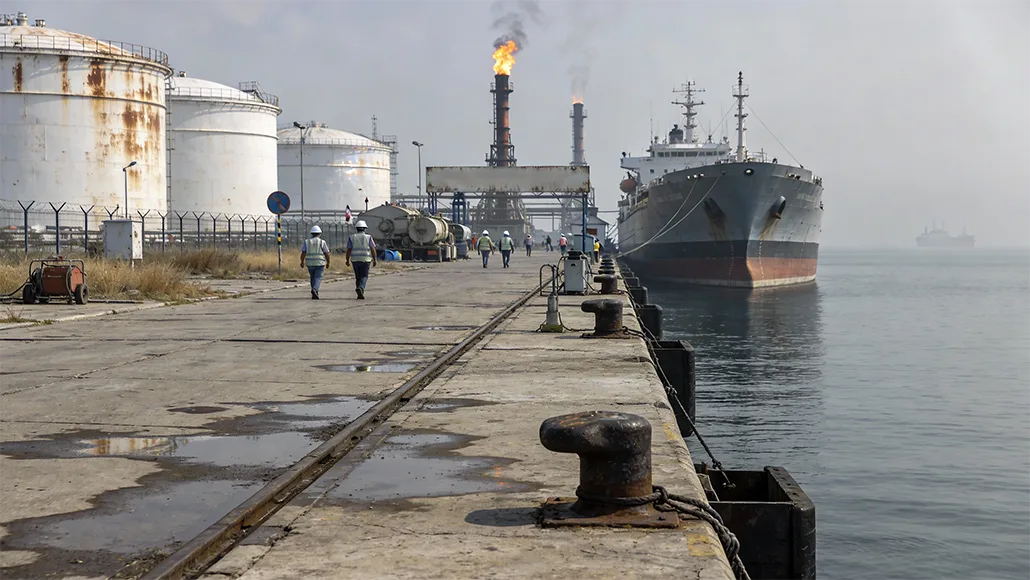
As far as Azerbaijan is concerned, the project does deepen its role of being a strategic energy supplier to Europe. Baku has already started exporting gas to Serbia, and now it is moving further along the value chain – right from raw gas supplier to being a co-investor in electricity generation capacity.
President Aliyev underscored the fact that the export potential of Azerbaijan at present stands at almost 2 gigawatts and is anticipated to grow pretty significantly by 2032 because of major renewable energy projects. Serbia, hence, is not just a customer, but it is also becoming part of the much broader European energy architecture of Azerbaijan.
And the mutual benefits are indeed clear. With Azerbaijan-Serbia relations, Serbia goes on to secure supply and new capacity, and Azerbaijan, on the other hand, expands market access as well as cements its image of being a dependable partner in a time when Europe is looking for diversification.
Apart from economics, the meeting also reinforced a shared political understanding. Both the leaders stressed respect when it came to territorial integrity along with state sovereignty. Aliyev form
Azerbaijan congratulated Serbia, which has strengthened its statehood, whereas Vucic highlighted that Serbia has constantly supported Azerbaijan on challenging issues.
This sync indeed makes a difference. Both nations operate within sensitive geopolitical environments, the Balkans along with the South Caucasus, wherein the questions of borders, identity, and international recognition are indeed very delicate. The repeated references pertaining to mutual support across international organizations were not incidental. They form part of a practical diplomatic understanding.
It is well to be noted that the Strategic Partnership Council institutionalizes this sync to some extent. Serbia goes on to hold such a format with just a limited number of states. Through placing Azerbaijan in this category, Belgrade does highlight that the relationship is not just transactional but also structural.
While the energy went on to dominate the headlines, the array of documents that were exchanged demonstrates a wider ambition.
Agreements have been signed pertaining to food security, economic cooperation, media, communications, culture, sports, and health insurance systems. These may look to be secondary; however, they do serve two major functions.
Firstly, they go on to create a bureaucratic momentum. Through instructing ministries to go ahead and produce robust projects before the upcoming visit by Vucic to Azerbaijan, both presidents are demanding execution and not symbolism.
Second, they broaden the relationship into people-to-people domains, with the launch of direct Belgrade–Baku flights in May 2026 being a practical step in this direction. Tourism and business travel, along with cultural exchange, also become much easier as the connectivity enhances.
In addition to this, food security cooperation is also strategically relevant. In a world that has supply chain disruptions, agricultural exchange between the politically aligned partners decreases vulnerability.
President Ilham Aliyev went on to make a pointed remark – investment happens to flow only to countries wherein there is trust and a balanced climate. Through committing enough capital to energy infrastructure in Serbia, Azerbaijan is in an effective way also endorsing the economic reforms along with the investment environment of Serbia.
President Vucic went on to reciprocate with an unusually personal praise by way of repeatedly describing Aliyev as being a trusted partner and also an experienced statesman. The tone went on to reflect not just diplomacy but also a political chemistry.
This chemistry is indeed all about practical results. The trade in services of Serbia with Azerbaijan has grown pretty dramatically in the past decade. More significantly, the bond is transitioning from episodic cooperation to more strategic planning.
The reference to the EXPO 2027 in Belgrade and confirmed participation by Azerbaijan further improves the partnership in the long-term planning cycles.
If one goes beyond ceremony and diplomatic courtesies, the meeting does reveal three defining aspects at its core.
First, energy security is indeed the engine of cooperation, with gas exports, electricity generation, and renewable expansion forming the backbone.
Second, sovereignty happens to be the political glue, as both the leaders frame their domestic along with foreign policies around robust statehood with mutual respect when it comes to territorial integrity.
Third, execution is being prioritized. Presidential oversight when it comes to the power plant project and crystal-clear instructions to ministers indeed signal that both sides anticipate delivery within months and not years.
In spite of a fragmented European and Eurasian environment, the mid-sized states are growingly building selective and interest-based alliances. The Azerbaijan–Serbia Strategic Partnership Council happens to reflect that trend. It is less of a grand geopolitical realignment and more of a disciplined and sector-by-sector consolidation.
As for Serbia, the advantage lies in energy sources that are diversified, foreign investment, and also reinforced global backing. When it comes to Azerbaijan, it goes on to lie in much deeper European integration, widened export routes, and also strengthened diplomatic support.
The fact is that the meeting in Belgrade did not come up with some dramatic rhetoric, but it showcased something more durable, and that was infrastructure plans, agreements that were signed, and also a framework that’s crafted to outlast the political cycles.
If executed at the pace that both presidents have publicly demanded, this collaboration could also go on to become a model of how two strategically placed countries go ahead and convert political goodwill into much tangible power that could be measured not just in megawatts but also in mutual growth.
