












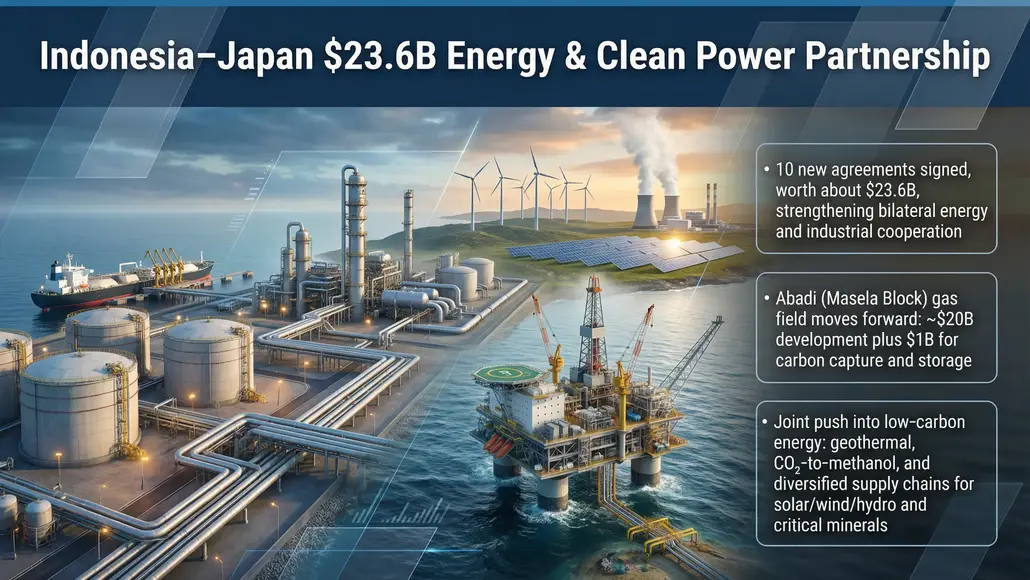
Indonesia and Japan have advanced their bilateral economic and energy cooperation with the signing of 10 memoranda of understanding and strategic business agreements valued at approximately $23.6 Bn Deal. The agreements were concluded during the official visit of Prabowo Subianto to Tokyo, where discussions took place with Japanese Prime Minister Sanae Takaichi. The timing of this $23.6 Bn Deal aligns with heightened global concerns over energy security, particularly amid geopolitical tensions and risks of supply disruptions linked to the Strait of Hormuz.
During the high-level meeting, Prime Minister Takaichi underscored Indonesia’s role as a critical energy supplier for Japan, which continues to rely heavily on the country for liquefied natural gas and thermal coal imports. However, the scope of the newly signed agreements extends beyond conventional energy trade. The $23.6 Bn Deal is structured to deepen collaboration across clean energy initiatives, oil and gas exploration, and industrial development, signalling a broader strategic alignment between the two economies.
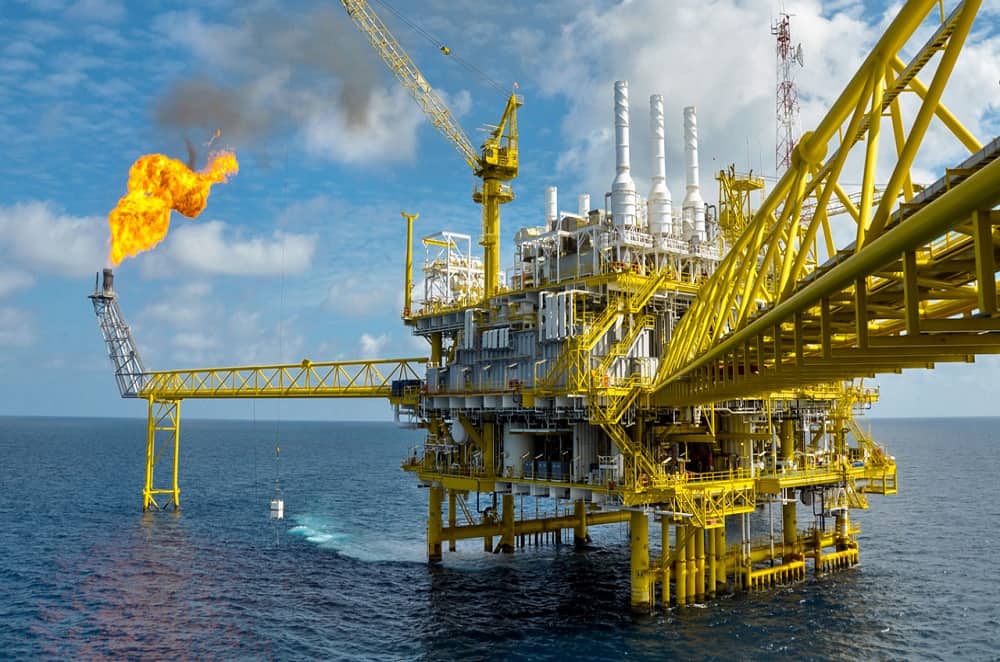
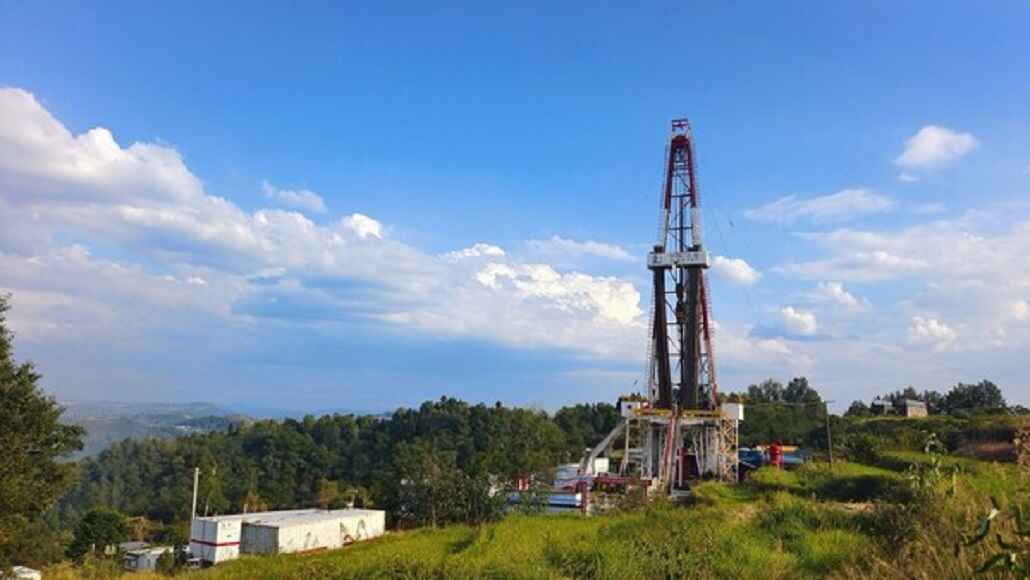
A key component of the partnership is the advancement of the Abadi Gas Field project located in the Masela Block, a development that has faced delays in previous years. The project carries an estimated value of around $20 billion and will be executed through a joint effort between Indonesia’s state-owned Pertamina and Japan’s INPEX. In addition to its core development, the project includes a further $1 billion allocation toward carbon capture and storage technology, reflecting efforts to integrate emissions reduction measures into large-scale energy infrastructure.
Cooperation between Indonesia and Japan also spans renewable energy and low-carbon initiatives. Both countries are working on geothermal power projects and a methanol production programme that utilises captured carbon dioxide. These initiatives highlight a shared approach to balancing energy security with environmental objectives. President Prabowo noted that closer economic collaboration would contribute to regional peace and stability. As part of this broader framework, both nations are focusing on diversifying energy portfolios through hydropower, solar, and wind, while strengthening supply chains for critical minerals and rare earths. The $23.6 Bn deal, therefore, reflects a comprehensive effort to enhance resilience and address evolving global energy challenges.
