

















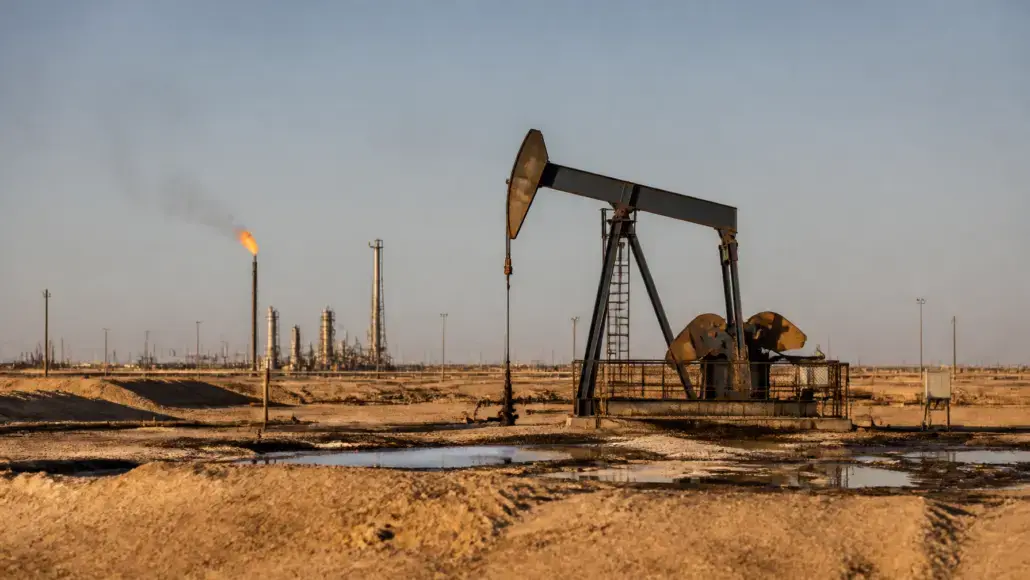
Iraq’s Ministry of Oil has confirmed positive hydrocarbon indications in the Al-Qarnain block situated in Najaf province. The Al-Qarnain discovery supports potential additions to the country’s light crude resources as field evaluation activities continue.
Salim Al-Rikabi, spokesman for the Iraqi Oil Ministry, said, “Exploration and evaluation work in the Al-Qarnayn area has achieved a high completion rate within the obligations required for the first exploration phase.”
A 2D seismic survey has been completed in Al-Qarnain discovery, while processing and interpretation of both existing and newly acquired data are currently underway following the seismic survey to prepare for subsequent phases.
Appraisal Operations and Block Characteristics
The ministry plans to drill two additional appraisal wells to further assess reservoir characteristics and production potential. According to Al-Rikabi, the initial exploratory well resulted in confirmation of a promising presence of light crude, launching the formal evaluation program for the project.
The project is expected to contribute to Iraq’s light crude reserves, support future production growth, and improve the utilization of associated gas. The Al-Qarnain discovery was made in May 2026 by China-based Zhenhua Oil under Iraq’s fifth supplementary and sixth licensing rounds. Spanning 8,773 square kilometers in southwestern Iraq along the border with Saudi Arabia, the Al-Qarnain block is regarded as a prospective area for energy exploration.
Production Figures and Crude Exports Infrastructure
Iraq’s crude oil production currently stands at 2.75 million barrels per day (mmbbl/d), according to Oil Minister Basim Mohammed Khudair Al-Abadi during an August 8 press conference. However, export disruptions associated with ongoing conflict and the closure of the Strait of Hormuz have reduced crude exports to approximately 1.75 mmbbl/d this month.
To address logistical disruptions impacting crude exports, Baghdad signed a one-year temporary agreement with Türkiye to transport up to 750,000 barrels per day (bbl/d) from the Kirkuk fields through Türkiye’s Ceyhan port. This arrangement includes potential expansion to 1.5 million barrels under a new agreement expected to be signed in 2026. Concurrently, Iraq is increasing crude shipments by tanker from Basra alongside volumes transported north from southern fields through the strategic pipeline.
