





















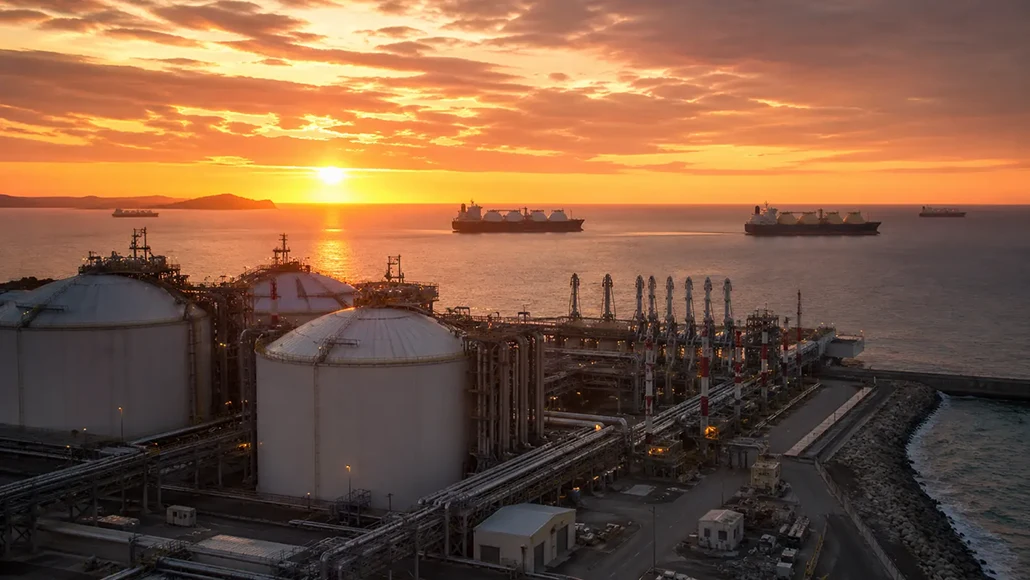
United States liquefied natural gas (LNG) exporters have temporarily offset a widening global supply gap triggered by falling LNG shipments from Qatar, following Iranian attacks on energy infrastructure and disruptions across key Middle Eastern shipping routes. The surge in U.S. LNG exports has helped maintain overall supply levels at historic highs despite the ongoing geopolitical tensions, as per reports. At the same time, stalled US-Iran negotiations have added complexity to efforts aimed at restoring Qatar’s damaged LNG export infrastructure. Qatar, the world’s third-largest LNG producer, has seen a significant hit to capacity. Last month, the chief executive of QatarEnergy said the attacks had wiped out roughly 17% of the country’s LNG export capacity, with the impact potentially lasting up to five years.
In response, U.S. LNG exporters have ramped up operations, maximising liquefaction capacity and tightening vessel loading schedules to increase shipment volumes. Data from Kpler show U.S. LNG exports are estimated to reach a record 32.15 million metric tonnes between January and April 2026, marking a 28% rise compared with the same period last year. This roughly 7 million-tonne increase has more than compensated for Qatar’s decline of 6.93 million tonnes during the same timeframe. Consequently, total global seaborne LNG exports are projected to exceed 149 million tonnes in the first four months of 2026, reflecting a 6% year-on-year increase, with U.S. LNG exports accounting for a record 18% share.
Operationally, Cheniere Energy’s Sabine Pass terminal in Louisiana continues to serve as the central hub for U.S. LNG exports, managing about 25% of shipments in the first quarter. Meanwhile, Venture Global’s Plaquemines LNG terminal has played a pivotal role in driving growth, with export volumes surging 240% year on year. The facility shipped nearly 6.5 million tonnes of LNG in the first quarter of 2026, compared with less than 2 million tonnes a year earlier. Despite this strong performance, sustaining such output levels may prove challenging. Routine maintenance requirements, along with risks linked to extreme weather and the approaching hurricane season in early summer, could disrupt operations and slow export momentum.
Europe has emerged as the dominant destination for U.S. cargoes, accounting for around 72% of shipments in 2026, with nine of the top ten buyers located in the region. Although seasonal demand typically eases as temperatures rise, storage levels remain low at approximately 30% following the winter season. This suggests that replenishment needs ahead of the next winter could continue to underpin demand for U.S. LNG exports, even as broader market conditions evolve.
