








Key Takeaways:
- The rapid acceleration of subsea technology advancements is fundamentally altering the feasibility of deepwater development by providing smarter subsea systems that can operate in extreme pressures and temperatures. By integrating digital subsea monitoring and real-time data analytics, operators are now able to detect potential equipment failures before they occur, significantly reducing downtime and enhancing the overall safety and reliability of complex offshore production technology.
- Modern subsea innovation focuses on achieving greater cost efficiency through the standardization of equipment and the deployment of all-electric subsea systems that eliminate the need for costly hydraulic lines. These advancements allow for longer tie-backs and the revitalization of aging fields, ensuring that offshore production remains economically viable even in volatile market conditions while simultaneously minimizing the environmental footprint of seabed operations.
The landscape of global energy production has undergone a tectonic shift as conventional shallow-water reserves become increasingly depleted, forcing the industry to venture into deeper and more hostile maritime environments. Central to this frontier expansion are the profound subsea technology advancements that have transformed what was once considered inaccessible into highly productive energy hubs. These innovations are not merely incremental improvements but represent a fundamental reimagining of subsea systems, moving away from reactive maintenance toward proactive, data-driven management. The ability to operate reliably at depths exceeding 3,000 meters requires a sophisticated blend of materials science, mechanical engineering, and digital integration that defines the current era of offshore production technology.
The primary driver for these advancements is the persistent need for cost efficiency and enhanced reliability in an industry characterized by high capital expenditure and volatile commodity prices. In the past, subsea developments were often plagued by high intervention costs and the technical limitations of hydraulic systems. Today, however, the shift toward “all-electric” subsea architectures is revolutionizing the field. By replacing complex hydraulic umbilicals with electrical power and communication lines, operators can achieve faster response times, greater control over subsea valves, and a significant reduction in the size and weight of the infrastructure. This transition to smarter subsea systems is essential for making deepwater development economically viable across a broader range of oil and gas prices.
The Evolution of Smarter Subsea Systems and All-Electric Infrastructure
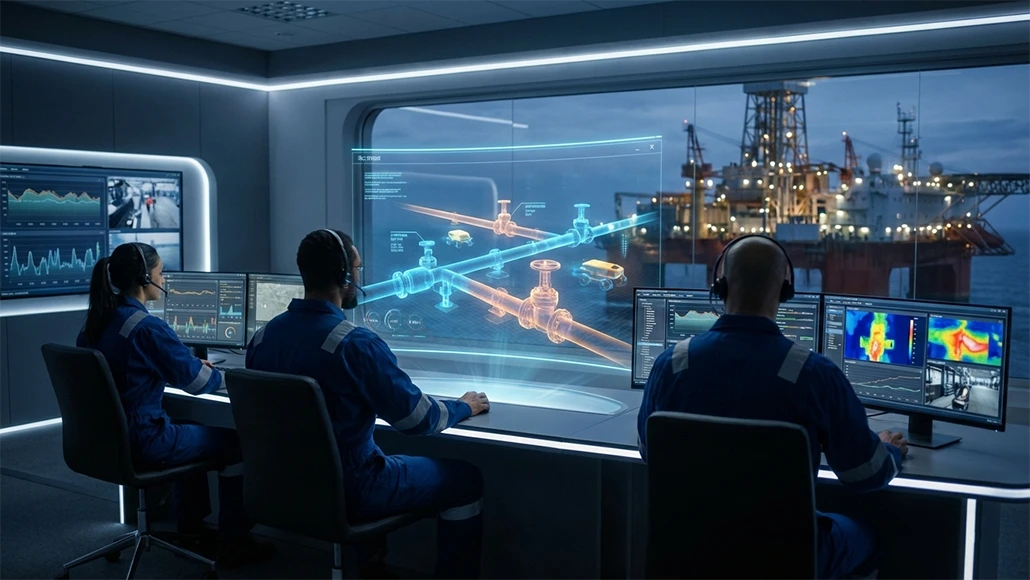
The move toward smarter subsea systems is characterized by the integration of intelligence directly at the seabed. Modern subsea trees, manifolds, and processing units are now equipped with a vast array of sensors that monitor everything from flow rates and pressure to vibration and chemical composition. This data is transmitted in real-time to topside facilities or onshore control centers, allowing engineers to maintain a precise “digital twin” of the subsea environment. This level of visibility is crucial for managing the complex fluid dynamics associated with deepwater production, where the risk of hydrate formation or wax deposition can lead to costly blockages if not managed with surgical precision.
Furthermore, the adoption of all-electric subsea technology is proving to be a game-changer for long-distance tie-backs. Traditional hydraulic systems suffer from significant pressure drops over long distances, limiting the distance a subsea well can be located from its host platform. Electric systems, by contrast, can transmit power and signals over much greater distances with minimal loss. This capability allows operators to develop smaller, satellite reservoirs that were previously considered “stranded,” effectively extending the life of existing offshore assets and maximizing the return on investment. The increased reliability of electric actuators also reduces the frequency of subsea interventions, which are among the most expensive and risky activities in offshore production.
The Impact of Subsea Innovation on Enhanced Recovery and Processing
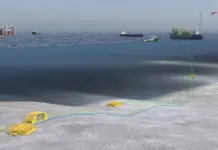
Beyond simple extraction, subsea innovation is now focused on moving complex processing functions from the surface to the seafloor. Subsea separation, boosting, and water injection are becoming increasingly common, as they allow for more efficient reservoir management and increased recovery rates. By separating water and sand at the seabed, operators can reduce the energy required to pump fluids to the surface and minimize the need for large, expensive topside processing facilities. Subsea boosting, in particular, is vital for maintaining production levels as reservoir pressure declines over time, providing the necessary “lift” to transport hydrocarbons over long distances and up to the surface.
These processing advancements are also contributing to the industry’s sustainability goals. By reinjecting produced water directly back into the reservoir at the seabed, operators can reduce the risk of surface contamination and lower the overall carbon footprint of the production cycle. The development of high-capacity subsea compressors and pumps that can operate reliably for decades without maintenance is a testament to the engineering excellence inherent in modern subsea technology advancements. As these technologies continue to mature, the concept of the “subsea factory” a fully autonomous production facility located entirely on the seafloor is moving from a futuristic vision toward operational reality.
Digital Subsea Monitoring and the Role of Artificial Intelligence
The digital revolution has brought about a paradigm shift in how subsea assets are monitored and maintained. Digital subsea monitoring now goes far beyond basic data collection; it involves the application of machine learning algorithms and artificial intelligence to predict equipment failures and optimize production schedules. By analyzing historical performance data alongside real-time sensor inputs, these systems can identify subtle anomalies that may indicate the early stages of a component failure. This predictive maintenance approach allows operators to plan interventions during scheduled downtime, avoiding the massive costs associated with unplanned outages and emergency repairs.
The use of autonomous underwater vehicles (AUVs) and remotely operated vehicles (ROVs) is also being transformed by digital subsea monitoring. Modern AUVs can now conduct high-resolution acoustic and visual inspections of subsea infrastructure without the need for a dedicated tether or a surface support vessel. These vehicles use AI to navigate complex subsea environments and can automatically identify signs of corrosion, leaks, or structural fatigue. The data they collect is seamlessly integrated into the asset’s digital twin, providing a continuous and comprehensive record of the equipment’s health throughout its lifecycle. This level of autonomy not only improves safety by removing human divers from hazardous environments but also significantly reduces the operational costs of subsea inspections.
Standardization and the Drive for Cost Efficiency in Subsea Engineering
One of the most significant barriers to deepwater development has historically been the highly customized nature of subsea equipment. Each project often required bespoke engineering solutions, leading to long lead times and high costs. In recent years, however, there has been a strong industry-wide push toward the standardization of subsea components and systems. By adopting common interfaces and modular designs, manufacturers can produce equipment more efficiently and operators can reduce the complexity of their supply chains. This standardization not only lowers initial capital costs but also simplifies maintenance and spare parts management, contributing to the overall cost efficiency of offshore production.
Standardization also facilitates more collaborative development models, where multiple operators can share infrastructure and technical expertise. In regions like the North Sea and the Gulf of Mexico, joint development projects are becoming more common as companies seek to spread the risks and rewards of challenging subsea projects. This collaborative spirit, supported by standardized subsea technology advancements, is essential for unlocking the full potential of complex reservoirs that would be economically unfeasible for a single company to develop in isolation. As the industry continues to refine these standards, the pace of subsea innovation is likely to accelerate, driving further improvements in performance and reliability.
The Future of Subsea Technology in a Decarbonizing World
As the global energy transition gathers pace, subsea technology advancements are being repurposed to support the growth of renewable energy and carbon capture. The expertise gained in deepwater oil and gas production is directly applicable to the development of offshore wind farms, where subsea cabling and foundation technologies are critical. Furthermore, subsea systems are being developed for the large-scale sequestration of carbon dioxide in offshore geological formations. Subsea manifolds and injection wells, designed to the same rigorous standards as production equipment, will play a vital role in ensuring that captured carbon remains securely stored beneath the seafloor for centuries.
The integration of subsea hydrogen production is another exciting frontier. By installing electrolyzers on the seabed near offshore wind farms, it may be possible to produce green hydrogen and transport it to shore using existing subsea pipelines. This approach would avoid the energy losses associated with long-distance electrical transmission and provide a versatile energy carrier for industrial and transport sectors. The versatility of modern subsea systems ensures that they will remain a cornerstone of the global energy infrastructure, regardless of the primary energy source. The focus on reliability, efficiency, and digital integration that characterizes subsea technology today will be the foundation for the sustainable energy systems of tomorrow.
Conclusion: Sustaining Momentum in Subsea Innovation
The ongoing evolution of subsea technology advancements is a testament to the ingenuity and resilience of the offshore industry. By embracing smarter subsea systems, digital subsea monitoring, and all-electric architectures, operators are overcoming the immense challenges of deepwater development and setting new standards for offshore production technology. These innovations are not only driving cost efficiency and reliability but are also paving the way for a more sustainable and integrated energy future. As the industry continues to push the boundaries of what is possible beneath the waves, the focus must remain on collaboration, standardization, and the relentless pursuit of technological excellence.
The success of future subsea projects will depend on the ability of the industry to attract new talent and foster a culture of continuous learning. The intersection of traditional marine engineering with data science and robotics offers a wealth of opportunities for the next generation of engineers and technicians. By investing in research and development and maintaining a forward-looking perspective, the subsea sector will continue to be a primary driver of global energy security and progress. The journey from the first shallow-water wells to the complex subsea factories of today has been remarkable, but the most exciting chapters of subsea innovation are likely yet to be written.
