





Key Takeaways:
- The integration of offshore drilling innovations is fundamentally altering the safety profile of maritime energy extraction by removing human personnel from the high-risk “red zone” of the rig floor. Through the implementation of drilling automation and sophisticated robotic pipe-handling systems, operators can ensure a more consistent and predictable workflow, significantly reducing the likelihood of manual handling accidents and improving the technical precision of complex offshore well construction projects in challenging deepwater environments.
- Leveraging real time drilling data allows for a proactive approach to hazard mitigation, enabling engineers to identify subtle geomechanical shifts or equipment anomalies before they escalate into critical safety incidents. This data-centric paradigm, supported by advanced drilling technology, provides a comprehensive view of the wellbore in real-time, allowing for rapid decision-making and the optimization of drilling parameters to maintain well integrity while ensuring that all operations remain within their designed safe working limits.
The extraction of hydrocarbons from beneath the seafloor has always been a battle against the elements, characterized by extreme pressures, remote locations, and the constant threat of equipment failure. However, the modern era is witnessing a profound shift in this dynamic, as a suite of offshore drilling innovations is being deployed to fundamentally enhance the security of personnel and assets. These innovations represent a departure from traditional reactive safety measures toward a proactive, system-based approach where risk reduction is ingrained in the very architecture of the drilling process. From the use of autonomous robotics on the rig floor to the deployment of sophisticated downhole sensors, the industry is leveraging every tool in the digital and mechanical arsenal to achieve the goal of zero harm.
The primary objective of these technological leaps is to minimize the exposure of human operators to the most hazardous aspects of the drilling cycle. Historically, the rig floor was a site of intense manual labor, where heavy machinery and high-pressure pipes required constant human intervention. Today, offshore drilling safety is being redefined by the widespread adoption of drilling automation, which allows for the remote control of pipe handling, casing running, and bit replacement. This not only improves the speed and consistency of operations but also creates a physical barrier between the workforce and the potential points of mechanical failure. The transition to a “normally unmanned” rig floor is no longer a distant vision but a tangible reality in many of the world’s leading offshore basins.
The Impact of Drilling Automation on Risk Mitigation
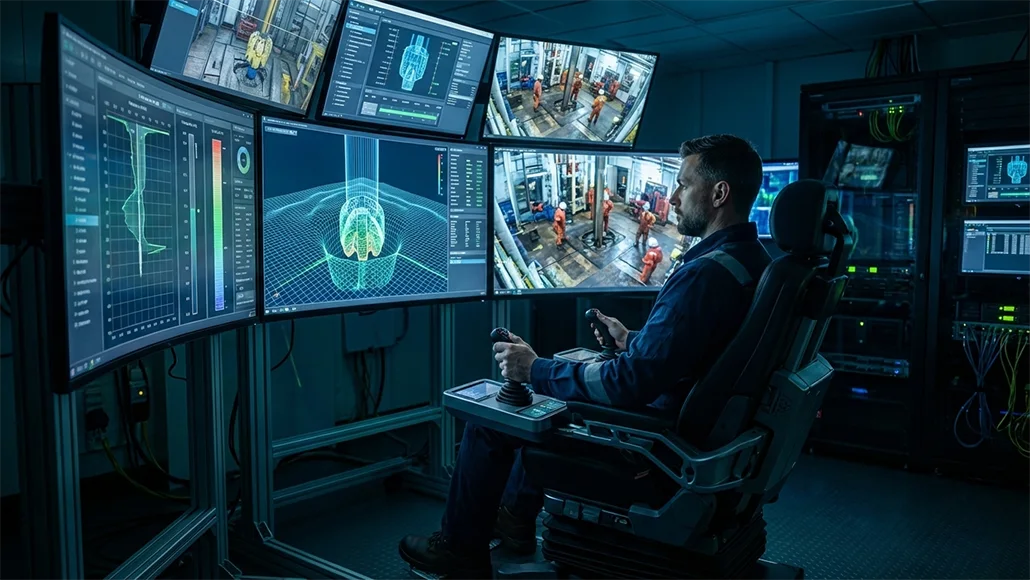
The implementation of drilling automation is perhaps the most visible of the offshore drilling innovations currently reshaping the industry. Modern rigs are increasingly equipped with “cyber-chairs” where drillers monitor a series of automated sequences from a safe, climate-controlled environment. These systems use complex algorithms to manage the weight on the bit, the rotation speed, and the mud flow rates, ensuring that the drilling process remains within optimal parameters. By automating these repetitive and high-precision tasks, companies can significantly reduce the risk of human error, which has historically been a contributing factor in many offshore incidents. The result is a more stable drilling environment where the risk of kick detection or wellbore instability is managed with mathematical precision.
Furthermore, automation allows for the synchronization of complex sub-systems that were previously managed independently. For instance, the automated control of the drawworks and the mud pumps can be linked to real time drilling data, allowing the system to react instantly to changes in reservoir pressure. This level of integrated control is vital for maintaining offshore drilling safety during the critical phases of offshore well construction, such as penetrating high-pressure high-temperature (HPHT) zones. As these automated systems continue to evolve, they are becoming more capable of handling unexpected variations in the subsurface environment, further reducing the reliance on manual intervention and enhancing the overall resilience of the drilling operation.
Utilizing Real Time Drilling Data for Enhanced Visibility
Visibility into the wellbore has traditionally been limited by the speed and accuracy of the data transmitted from the drill bit to the surface. Modern drilling technology has overcome these limitations through the use of high-speed telemetry and sophisticated downhole sensors. The continuous stream of real time drilling data provides engineers with a high-resolution view of the subsurface environment, including rock characteristics, fluid pressures, and the physical condition of the drill string. This transparency is a cornerstone of modern offshore drilling innovations, as it allows for the early detection of “pre-cursor” events that could signal an impending safety issue, such as a localized pressure build-up or the onset of vibration-induced fatigue in the drill collar.
The analytical power applied to this data is also increasing. Machine learning models are now used to analyze historical data alongside real-time inputs to predict the remaining life of critical components or to identify patterns that precede a mechanical failure. This move toward predictive maintenance ensures that equipment is replaced or serviced before it poses a threat to offshore drilling safety. Additionally, the ability to share this data in real-time with onshore support centers means that the on-site crew has access to the collective expertise of a global team of specialists. This “collaborative drilling” model ensures that the most difficult decisions are supported by the best available information, further enhancing the safety and technical integrity of the well.
Advancing Offshore Well Construction Standards
The physical infrastructure of the well itself is also benefiting from significant drilling technology advancements. Modern offshore well construction techniques focus on improving the long-term integrity of the wellbore, which is essential for preventing leaks and maintaining operational safety throughout the field’s productive life. Innovations in casing design, such as expandable tubulars and high-performance alloys, allow for more robust well architectures in deepwater environments. Additionally, the development of specialized cement formulations that can withstand extreme pressures and corrosive fluids is improving the quality of the primary seal, which is the most critical barrier against environmental contamination.
Managed Pressure Drilling (MPD) is another key innovation that is gaining widespread adoption. MPD allows for the precise control of the annular pressure profile throughout the wellbore, enabling operators to drill safely through narrow “pressure windows” that were previously considered undrillable. By maintaining a constant bottom-hole pressure, MPD reduces the risk of fluid influx (kicks) and wellbore collapse, both of which are major safety and environmental concerns. The integration of MPD with automated control systems represents the pinnacle of modern offshore drilling innovations, providing a level of safety and operational control that was unimaginable just a decade ago.
The Human Factor in the Age of Innovation
While technology is the driver of change, the success of these offshore drilling innovations ultimately depends on the skills and mindset of the workforce. The shift toward automation and data-driven drilling requires a new set of competencies, focusing more on system management, data analysis, and cross-functional collaboration. Training programs are being redesigned to incorporate high-fidelity simulators, where crews can practice responding to emergency scenarios in a safe, virtual environment. This immersive training ensures that when real-world challenges arise, the team is prepared to act with confidence and technical precision, maintaining the high standards of offshore drilling safety that the industry demands.
Moreover, the culture of safety must evolve alongside the technology. A “just culture” where transparency is valued and where workers feel empowered to halt operations if they perceive a risk is essential for maximizing the benefits of new drilling technology. The human-machine interface must be carefully designed to ensure that the wealth of data provided by real-time systems is presented in a clear and actionable format, preventing cognitive overload and ensuring that the driller remains the final arbiter of safety. By combining the best of human ingenuity with the precision of automated systems, the offshore industry is creating a safer and more sustainable future for global energy extraction.
Conclusion: Shaping a Safer Future for Offshore Drilling
The relentless pursuit of offshore drilling innovations is fundamentally transforming the maritime energy sector, turning what was once a high-risk gamble into a highly controlled and technical enterprise. Through the integration of drilling automation, the use of real time drilling data, and the advancement of offshore well construction techniques, the industry is setting new benchmarks for operational safety and environmental protection. These innovations are not just incremental improvements; they are a vital response to the increasing complexity of modern drilling projects and the growing demands for corporate and environmental accountability.
As the industry continues to push into deeper waters and more challenging geological formations, the focus on safety must remain absolute. The technologies developed today will be the foundation for the energy systems of tomorrow, ensuring that the extraction of vital resources is conducted with the highest possible level of integrity and care. The journey of innovation is never complete, but the progress made in recent years demonstrates that through collaboration, investment, and a steadfast commitment to safety, the offshore drilling industry can overcome even the most daunting challenges, providing a secure energy supply for the world while protecting the people and environments that make it possible.
